
Martin Lex is the pen name of the 7S1L safety desk: SOLAS, lifesaving and firefighting gear, muster drills, emergency signals and safe work on board. Portrait is illustrative.
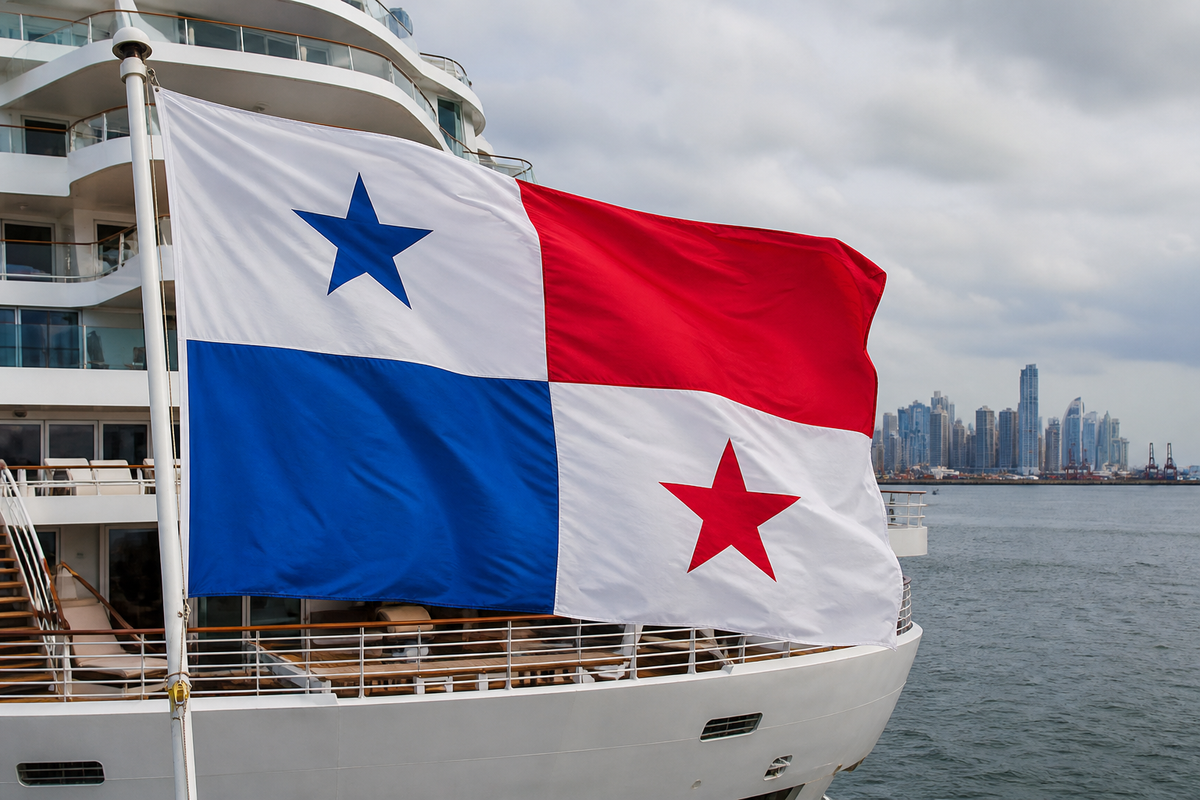
More seafarer employment agreements name Panama than any other flag. 371 million deadweight tons flew the Panamanian flag at the start of 2025 per UNCTAD, 15.2 percent of the world fleet, second only to Liberia. Unlike the other giant registries, Panama runs its own register: the Panama Maritime Authority in Panama City, not a contractor in Virginia or London. That makes Panama flag labor law the employment law most working seafarers actually live under, whether they have read it or not.
Before you sign a contract under the Panama flag, know which laws apply. You can check your seafarer contract free in the Seafarer Contract Checker. Pick Panama, and the report reads your SEA against MLC 2006 and the verified Panama facts.
The law under a Panama SEA
Work at sea under the Panamanian flag is governed by Decree Law No. 8 of 1998, a maritime labor law separate from Panama's onshore Labour Code, and by Executive Decree No. 86 of 2013, which turned MLC 2006 into 206 articles of national law. Your contract lives inside those articles. A few of them cut sharper than crews expect.
How Panama flag labor law and the MLC fit together
Panama ratified the Maritime Labour Convention on February 6, 2009, the fourth major shipping state to do so per the ILO. Four years later, Executive Decree 86 of February 22, 2013 wrote the convention into Panamanian law, article by article. So a Panama-flag ship carries two layers of the same rulebook: the MLC as the international floor, Decree 86 as the national text a court or the AMP will actually apply.
The proof hangs in the ship's office. Under MLC Regulation 5.1.3, a ship of 500 gross tons or more on international voyages must carry a Maritime Labour Certificate, valid for a maximum of five years, together with a Declaration of Maritime Labour Compliance. On a Panama-flag ship, Decree 86 defines that certificate as the AMP's confirmation that living and working conditions on board comply with the decree. When a port state control officer in Rotterdam or Singapore walks the gangway, those two documents plus your SEA are what gets read first. If the paper and the reality on board do not match, the ship has a problem. Article 197 lets the AMP restrict or detain a non-compliant vessel with no appeal against the measure.
Five articles worth reading twice
Article 42(g) and Article 175: the 16 week sickness cliff. The shipowner's duty to cover medical care, board and lodging runs 16 weeks from the day you fall sick or get injured. Full wages are owed only while you remain on board (Article 176). And once 16 weeks of illness have passed, the contract itself can be terminated. A messman with a bad shoulder injury can be off pay, off cover and out of a job in under four months.
Article 48: one year to claim. Most actions under the contract expire after one year, two for occupational risk. A wage dispute you sit on through one more contract is usually a wage dispute you lose.
Article 37 and Article 49: termination without cause is legal. Fifteen days of written notice plus severance ends an indefinite contract. The severance scale starts at 20 percent of one monthly wage for short service and tops out at six months of wages after five years.
Article 66: overtime at 25 percent. The surcharge on the basic hourly wage is one quarter, the lowest the MLC guideline contemplates, fixed as the national standard. If your CBA pays better, the CBA is doing the work, so make sure the SEA names it.
Article 194: social security for residents only. Panama opens its social insurance to seafarers who regularly reside in Panama. Nearly every Filipino, Indian, Indonesian or Ukrainian crew member on a Panama-flag ship builds no Panamanian pension. Whatever provident fund or insurance your contract names is what you get.
What that means for the payslip and the leave plan
The overtime rule is why the basic wage line matters so much. A 25 percent surcharge is calculated on the basic hourly wage, not on the total. Push more of the money into allowances or a consolidated lump sum, and every overtime hour gets cheaper for the owner. An oiler comparing two offers should compare the basic wage first, then the rest. How the basic relates to the ILO floor is covered in our seafarer minimum wage guide.
Leave is one of the friendlier chapters. Article 79 grants paid annual leave at 2.5 calendar days per month of employment, which adds up to 30 days over a full year, pro rata for shorter contracts. Article 85 makes any waiver of that leave void, even a waiver you signed in exchange for money. And Article 84 says the owner may not call you back on board during your leave except in cases of extreme urgency. Leave pay belongs in its own line on the payslip. If it is buried in a consolidated wage, you cannot see whether it was ever paid.
Rest hours run on the MLC standard: at least 10 hours of rest in any 24 hour period and 77 hours in any 7 day period, divided into no more than two blocks, one of them at least six hours (Articles 72 and 73). The record of those hours must be kept in the ship's working language and in English, and you countersign it. Sign what actually happened. A falsified rest hour sheet protects the ship, not the AB who was on deck through the second cargo watch.
One more line worth checking: duration. A fixed term SEA under Decree 86 must be in writing and may not run longer than one year (Article 36), and Article 90 caps service on board at 12 months before repatriation is due.
The other side of the ledger
Decree 86 also protects. Rights waivers are void, the most favorable interpretation goes to the seafarer, and the minimum wage cannot be attached by creditors (Article 64). Enforcement is real money: the AMP recovered 8.5 million dollars in unpaid wages for crews in 2024 alone. On port state control, Panama fell to the Paris MoU Grey List in 2023 and climbed back onto the White List in the report published in July 2026.
The dark number stands next to that: the ITF counted 68 abandonment cases on Panama-flag ships in 2025, the most of any flag in the worst year on record. If it comes to a dispute, the verified complaint contacts are on our Panama flag page.
 Free crew appSeafarer Contract CheckCheck your contract clause by clause against MLC 2006 and flag state regulations. The check is free. On iPhone, Android or in the browser.
If something goes wrong on board
Decree 86 forces every Panama-flag ship to run an approved on-board complaint procedure (Article 198). The path is fixed in Article 202: you raise the complaint with your head of department or superior officer, who has up to five days to resolve it. If that fails, it goes to the master personally. At every step you may bring another seafarer of your choice as support, and the complaint and its outcome must be recorded in writing, with copies to you.
Two protections sit around that process. Article 199 prohibits any harassment against a seafarer for filing a complaint. And Article 200 obliges the owner to hand you a copy of the on-board complaint procedure together with your complete SEA. If you never received it, that is itself a finding. When the on-board route is exhausted, the path continues ashore: port state control, the ITF inspector, the AMP itself. The full escalation with verified contacts is in our Panama complaint guide.
Panama flag in the contract: what I check before sign-on
A bosun packing for a Panama-flag tanker checks the sea bag twice. The contract deserves the same pass. Before sign-on, check:
- Basic wage, overtime rate and leave pay stand in separate lines. No consolidated blur.
- The SEA names the law that actually applies: Decree Law 8 of 1998 and Executive Decree 86 of 2013, not Panama's onshore Labour Code.
- The notice period and the repatriation clause hold up against a maximum of 12 months on board (Article 90).
- Any fixed term is in writing and no longer than one year (Article 36).
- The SEA names the CBA, if there is one, and the CBA wage scale is attached. Under Article 66 the CBA is what lifts overtime above 25 percent.
- You had the chance to read the contract and take advice before signing, and you keep a signed original (Articles 31 and 32).
- You received the on-board complaint procedure with your SEA (Article 200).
Clauses that fail these checks tend to fail others too. The general warning signs, flag by flag and clause by clause, are in our guide to employment agreement red flags. How Panama compares with every other register is in our guide to flags of convenience and your contract.
The 90 second version
This flag in one video:
How the Panama flag rates in port state control
Port state control keeps score on every flag. The regional inspection regimes publish each year which registers get detained most, and the ITF keeps its own list of flags of convenience. This is where Panama stands on the current lists:
- Paris MoU (Europe and Canada): white list, rank 36 of 69, performance list valid July 1, 2026 to July 6, 2027.
- Tokyo MoU (Asia Pacific): high performance, inspections and detentions 2022 to 2024.
- ITF: listed as a flag of convenience, 2025 list.
- MLC 2006: party to the Convention.
These lists count detentions, not contracts. A white list flag can still sit under a bad SEA, and a black list flag tells you how much backing to expect from the administration when something goes wrong on board. The current rating of every flag we cover stands on the Panama flag page, and the app report names MLC 2006 plus the flag at the top of every check, with the same rating next to it.
Source note
Executive Decree No. 86 of 2013 (English text via ClassNK), Panama Maritime Authority, ILO announcement of Panama's MLC ratification, February 6, 2009, the MLC 2006 text at ILO NORMLEX, ITF abandonment reporting 2025, UNCTAD fleet data as of January 1, 2025, and Paris MoU performance lists. Article numbers follow the ClassNK English translation of Decree 86.
This article is editorial context for working crew, not legal advice. For a live dispute, use the verified contacts in the complaint guide and get advice from your union, an ITF inspector or a maritime lawyer.
FAQ
What labor law applies on a Panama-flagged ship?
Work on board is governed by Decree Law No. 8 of 1998, Panama's maritime labor law, and by Executive Decree No. 86 of 2013, which implements MLC 2006. Panama's onshore Labour Code does not apply at sea.
Has Panama ratified the MLC 2006?
Yes. Panama ratified the Maritime Labour Convention on February 6, 2009 and implemented it through Executive Decree 86 of 2013. The AMP is the competent authority.
How much overtime pay is required under the Panama flag?
Article 66 of Decree 86 sets the minimum overtime surcharge at 25 percent of the basic hourly wage. A collective bargaining agreement can set a higher rate, so check which CBA your SEA names.
How many paid leave days do seafarers get under Decree 86?
Article 79 grants 2.5 calendar days of paid annual leave per month of employment, about 30 days per year, pro rata for shorter contracts. Any waiver of that leave is void under Article 85.
How long can a contract under the Panama flag last?
A fixed term SEA must be in writing and may not exceed one year (Article 36). Service on board is capped at 12 months before repatriation is due (Article 90).
How do I complain about conditions on a Panama-flagged ship?
Start with the on-board procedure: head of department first, who has five days to resolve it, then the master (Article 202). Harassment for filing is prohibited, and past the gangway the route runs through port state control, the ITF and the AMP.
7SHORT1LONG® is a Seafarer Identity Brand. We build gear for the crews who work under this flag: seafarer t-shirts that name the trade, and a sign on set for the day the contract starts. The biggest flag in your career deserves the closest read.
YES, WE ARE CREW.
Gear for the watchSeafarer T-Shirts · Crew Best SellersBuild your Sign On Set · Build your Sailor Set