Martin Lex is the pen name of the 7S1L safety desk: SOLAS, lifesaving and firefighting gear, muster drills, emergency signals and safe work on board. Portrait is illustrative.
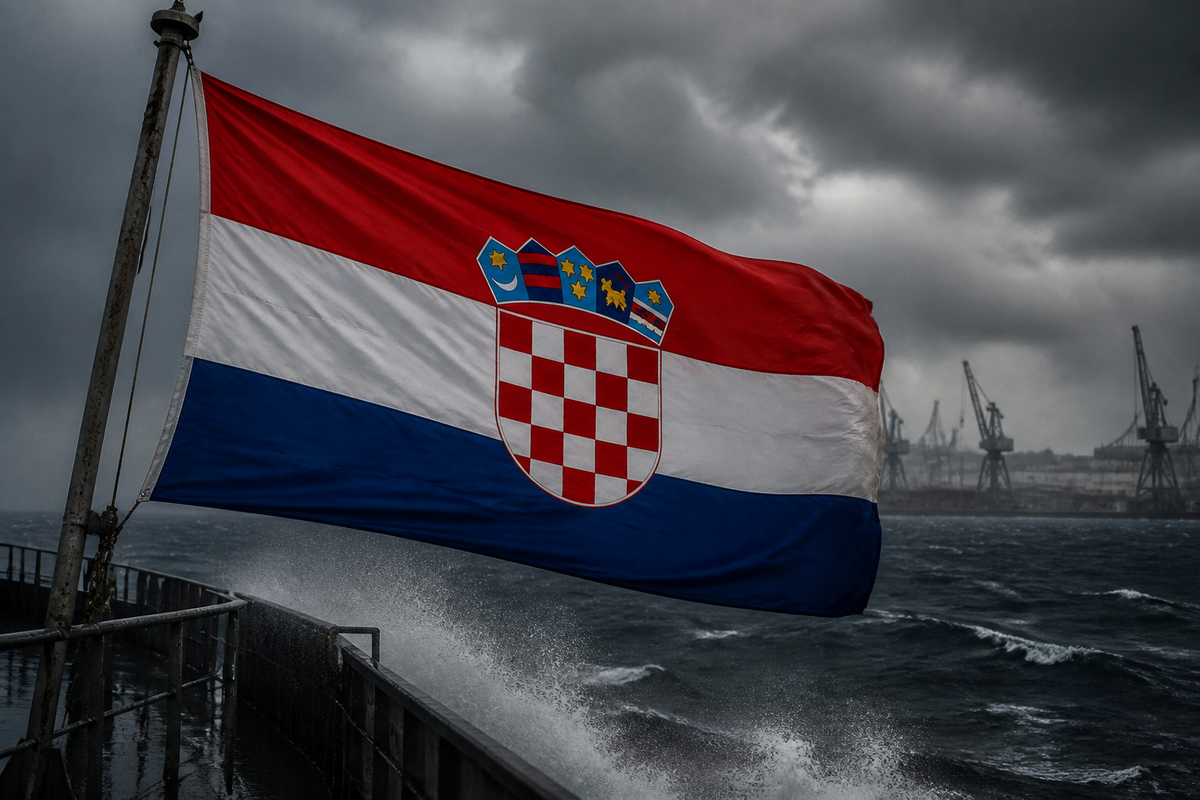
Croatia produces far more seafarers than it flags ships. Around 20,000 Croatians sail the world fleet, most of them under foreign flags, while the Croatian-flag international fleet is small enough that the Paris MoU logged fewer than a hundred inspections of it in three years. Croatia flag labor law still matters twice over: once for anyone who signs under it, and once, through the tax rule at the center of this piece, for every Croatian seafarer regardless of flag.
Before you sign a contract under the Croatian flag, know which laws apply. You can check your seafarer contract free in the MLC Contract Check against MLC 2006 and the verified Croatia flag facts.
Croatia flag labor law: what governs a Croatian SEA
The Maritime Code, the Pomorski zakonik, is the special law for shipboard employment, with the general Labour Act filling gaps. SEAs on Croatian ships in international trade state Croatian law and the jurisdiction of Croatian courts, and the collective layer is national: since January 2025 two agreements signed by the shipowners' association Mare Nostrum and the ITF-affiliated Seafarers' Union of Croatia, one for Croatian seafarers, one for third-country nationals. The agreement terms are deemed incorporated into your individual contract.
On paper that means one clean check first. Open the SEA and find the governing law clause: it should name Croatian law and Croatian courts. A clause that quietly routes disputes somewhere else deserves a direct question to the crewing agent. Then the collective layer. Both agreements were published in Narodne novine 24/2025, the official gazette, so the text is public. An agent who cannot hand you the current edition with your rank's wage scale is asking you to sign blind.
"Deemed incorporated" does real work here. The agreement terms sit inside your individual contract even where the SEA itself says less, so a wage line below the collective scale is a defect, whatever the agent calls it. These patterns repeat under every flag; our guide to seafarer employment agreement red flags walks through them clause by clause.
Two collective agreements, two rulebooks
The third-country agreement exists because Croatian ratings are scarce, and its terms are concrete: a 40 hour week with guaranteed overtime of 103 hours per month at 1.25 times basic, six days of leave per completed month, tours up to nine months in any twelve with one month of operational flexibility and automatic termination at the first port after expiry, wages in US dollars, full repatriation at company cost including a daily food allowance in transit. If you are non-EU crew on a Croatian ship, that document is your rulebook. Get the current edition and check your rank's scale.
Read those numbers the way an oiler reads a sounding log. The 103 guaranteed overtime hours are paid whether the month was quiet or brutal. The real question sits above that line, so ask how additional hours are recorded and at what rate they clear. Six days of leave per completed month sounds simple until a tour ends mid-month; ask how broken months count. And the nine month frame with automatic termination at the first port after expiry is a hard stop. If your relief is delayed, the company owes you a flight home, not a "few more weeks".
Wages in dollars still have a floor under them: the AB basic reads against the ILO minimum, covered in our seafarer minimum wage 2026 breakdown. Nine months also sits at the long end of what the industry writes today; how tour lengths differ by trade and rank is in how many months a seafarer contract runs.
The 183 day rule
For Croatian residents the sharpest law is fiscal. Spend more than 183 days of the year in international navigation and your shipboard income is exempt from Croatian income tax, with the annual filing still mandatory. Days are counted generously, travel from home to the port of embarkation included, and documented through the DPOM and EPOM forms. Fall short, after a long leave year or a cut-short contract, and the wages become taxable. Croatian crews plan contract lengths around this line the way navigators plan around a tidal window. Social contributions remain due regardless, and after sign-off you have 30 days to register with the health insurance fund to keep coverage running.
The arithmetic decides. Two five month tours in a calendar year clear the line. One four month contract in a year of long leave does not. This is why a Croatian second engineer will sometimes push a sign-off date back or take a short relief contract in November: the calendar, not the wallet, is being managed. Keep the paper trail complete. The DPOM and EPOM forms are your proof, and the record starts at your front door, since travel days count.
Croatian crew under foreign flags
Most Croatian seafarers never sign under their own flag. The officer corps sails under Panama, Liberia, Malta and the rest of the open registries, and there the Croatian Maritime Code has nothing to say: your SEA follows the flag on the stern. Which law that actually is, and where the traps sit, is the subject of our flags of convenience contract guide.
Two things still follow a Croatian seafarer onto any flag. The 183 day rule, because it attaches to tax residence rather than to the ship, and the social contributions that remain due wherever the wages come from. The DPOM and EPOM discipline is the same whether the funnel says Zagreb or Monrovia. For how another EU seafaring nation balances national law against an internationally trading fleet, see our piece on Greece flag labor law.
 Free crew appSeafarer Contract CheckCheck your contract clause by clause against MLC 2006 and flag state regulations. The check is free. On iPhone, Android or in the browser.
How Croatia handles MLC compliance
Croatia ratified the Maritime Labour Convention on 12 February 2010, among the first ten states worldwide, years before it entered into force in 2013. The competent authority is the Ministry of the Sea, Transport and Infrastructure through its Maritime Safety Directorate in Zagreb, which is the national MLC contact point (mlc@pomorstvo.hr) and publishes the Croatian DMLC Part I and a model on-board complaint procedure.
In practice a Croatian ship of 500 GT or more in international trade carries a Maritime Labour Certificate with its DMLC, with a copy available to the crew. If conditions aboard do not match the paper, the sequence is the standard MLC ladder: on-board complaint procedure first, then the flag contact point above, and in a foreign port the port State control officer at the gangway.
Before you sign under the Croatian flag
- Confirm which of the two collective agreements covers you and get the current edition with your rank's wage scale.
- Check the governing law clause: Croatian law, Croatian courts, no quiet detours.
- Check the tour length against the nine month frame and read how the automatic termination clause is worded.
- Check the overtime clause: 103 guaranteed hours at 1.25 times basic under the third-country agreement, plus how hours above that are recorded and paid.
- Check the repatriation clause: full company cost, daily food allowance in transit included.
- Croatian residents: count your days before you accept a short contract in a year you need the exemption, and keep DPOM and EPOM records from the first travel day.
- After sign-off, remember the 30 day window to register with the health insurance fund.
The verified administration contacts are on our Croatia flag page. And if the sea bag is already open on the bed, the sign-on set covers the basics for the flight out, while the European sailor t-shirt says which coast trained you before a word is spoken in the mess room.
The 90 second version
This flag in one video:
How the Croatia flag rates in port state control
Port state control keeps score on every flag. The regional inspection regimes publish each year which registers get detained most, and the ITF keeps its own list of flags of convenience. This is where Croatia stands on the current lists:
- Paris MoU (Europe and Canada): white list, rank 30 of 69, performance list valid July 1, 2026 to July 6, 2027.
- Tokyo MoU (Asia Pacific): not ranked (too few inspections), inspections and detentions 2022 to 2024.
- ITF: not listed as a flag of convenience, 2025 list.
- MLC 2006: party to the Convention.
These lists count detentions, not contracts. A white list flag can still sit under a bad SEA, and a black list flag tells you how much backing to expect from the administration when something goes wrong on board. The current rating of every flag we cover stands on the Croatia flag page, and the app report names MLC 2006 plus the flag at the top of every check, with the same rating next to it.
Source note
Croatian Maritime Code (ILO NATLEX record), the national collective agreements published in Narodne novine 24/2025, the Ministry of the Sea MLC page (ratification and contact point), the Ministry of the Sea on seafarer taxes and the 183 day rule, the ITF flag of convenience list, and Paris MoU performance lists. This article is editorial context for crew, not legal or tax advice. Rules and scales change; the flag administration and a Croatian tax adviser have the current word.
FAQ
Is Croatia a flag of convenience?
No. Croatia is not on the ITF list of flag of convenience registries. It is a traditional seafaring nation that supplies far more crew than it flags ships, and the ITF-affiliated Seafarers' Union of Croatia runs its own ITF inspectorate on the Adriatic coast.
What labor law applies on a Croatian-flagged ship?
Croatian law. The Maritime Code (Pomorski zakonik) governs shipboard employment, the Labour Act fills the gaps, and SEAs in international trade name Croatian courts. Since January 2025 two national collective agreements, one for Croatian seafarers and one for third-country nationals, are deemed incorporated into individual contracts.
How does the Croatian 183 day rule work for seafarers?
A Croatian resident who spends more than 183 days of the year in international navigation pays no Croatian income tax on shipboard earnings, though the annual filing stays mandatory. Days are counted from home travel to the port of embarkation onward and documented through the DPOM and EPOM forms.
How long can a contract be under the Croatian flag?
The third-country collective agreement allows tours of up to nine months in any twelve, with one month of operational flexibility and automatic termination at the first port after expiry.
Has Croatia ratified the MLC 2006?
Yes, on 12 February 2010, among the first ten states worldwide. The national contact point is the Maritime Safety Directorate of the Ministry of the Sea, Transport and Infrastructure in Zagreb (mlc@pomorstvo.hr).
7SHORT1LONG® is a Seafarer Identity Brand. Count your days like you count your rest hours.
YES, WE ARE CREW.
Gear for the watchSeafarer T-Shirts · Crew Best SellersEuropean Sailor Set · Build your Sailor Set