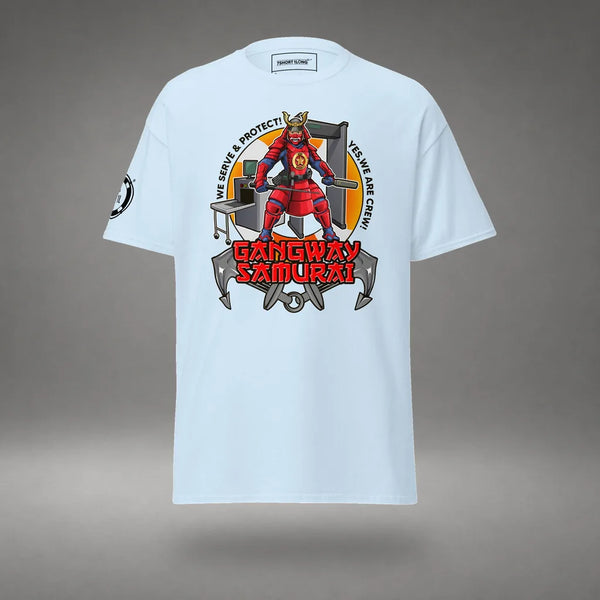
Martin Lex is the pen name of the 7S1L safety desk: SOLAS, lifesaving and firefighting gear, muster drills, emergency signals and safe work on board. Portrait is illustrative.
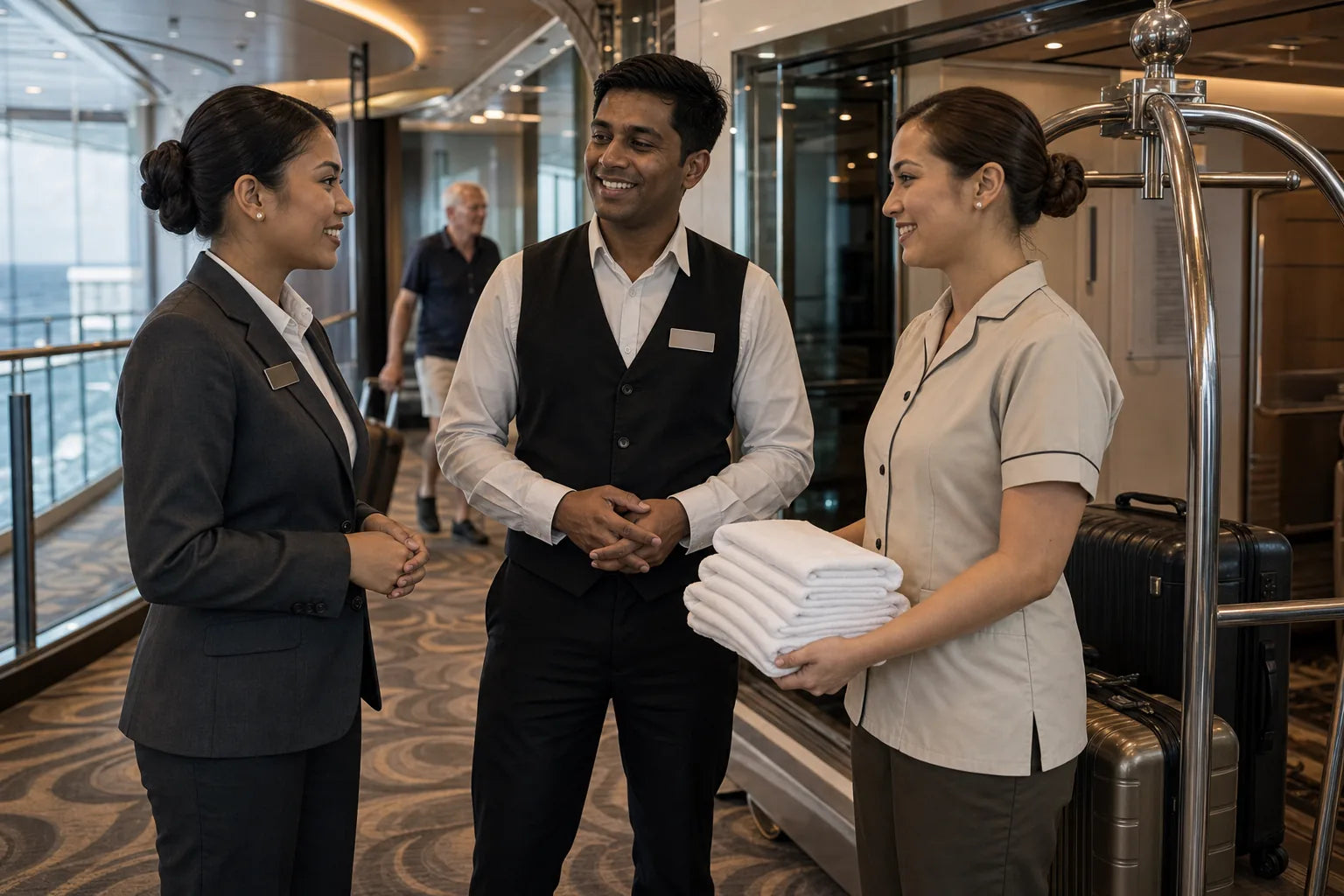
Every cruise is carried by crew most passengers barely see. If you want to support cruise crew, the first step costs nothing: notice them. Deck officers on the bridge. Engineers below. Galley teams before sunrise. Housekeeping moving through cabins and corridors. Security at the gangway. Hotel crew holding the guest operation together while the ship keeps schedule.
7SHORT1LONG® was built for those people first. The name comes from the signal every crew member knows: seven short blasts, one long. That is the General Emergency Alarm under SOLAS. When it sounds, every department moves to their muster station, regardless of rank or nationality.
This article is for guests. It explains who actually runs your ship, what a crew working day looks like, and what you can do on board that genuinely helps. Most of it takes less than a minute.
Who the crew behind your cruise actually is
On a typical large cruise ship there is roughly one crew member for every two to three guests. The biggest ships sail with more than 2,000 crew. That is a small town below your cabin deck, drawn from dozens of countries, working while you sleep.
The crew splits into worlds that rarely meet. The deck department runs navigation, mooring, tenders, and lifeboats. The engine department keeps propulsion, power, water, and air conditioning alive from spaces without windows. The galley feeds thousands of people every few hours. Housekeeping turns over corridors of cabins on port-day deadlines. Security screens every person at the gangway. Then there is the hotel side: waiters, bartenders, shop staff, spa, entertainment, guest services. On a cruise ship the hotel crew outnumbers everyone else. On a cargo ship the whole crew would fit at two mess room tables. If that contrast interests you, read our comparison of cruise ship life vs cargo ship life.
Your cabin steward, your waiter, the oiler you will never see: each one signed a contract, flew across the world, and walked up a gangway to start a job measured in months, not shifts.
What a crew working day really means
Here is the part most guests never hear. Working seven days a week is normal on cruise ships. Ten to thirteen hour days are common in hotel, dining, and galley roles. Contracts often run four to nine months. There is no weekend at sea. The day off comes when the contract ends.
The legal floor under all of this is the Maritime Labour Convention, 2006 (MLC 2006), an ILO convention ratified by countries covering over 90 percent of world shipping tonnage. It guarantees seafarers a minimum of 10 hours of rest in any 24 hour period and 77 hours in any 7 day period, plus a written employment agreement, regular wages, medical care, and repatriation. Read that again. The protection is a floor of rest hours, not a weekend. That is the industry.
We built a free browser tool for crew, the MLC Contract Check, which checks a seafarer employment agreement clause by clause against MLC 2006 in about a minute, with no account and no upload. If someone in your family or circle of friends works on ships, pass it on before their next sign-on. That is direct, practical support.
For guests who notice the crew
If you are a cruise guest, you can wear the signal as a sign of respect. Not as a souvenir. Not as costume nautical style. As a way to say you see the people working behind your voyage.
This is the supporter side of 7S1L. Passengers, families, and maritime friends who want to stand behind crew without pretending to be crew.
How to support cruise crew on board
Respect at sea is specific. Here is what actually lands.
Read the name tag. Use the name. Crew name tags usually carry a first name and a home country. "Thank you, Joel" is a different sentence than "thank you." A steward hears their own name maybe a handful of times a day from guests. It registers.
Take the muster drill seriously. SOLAS requires that passenger drill before or right at departure. The crew running it have trained for the real version of that alarm. Standing at your muster station with your attention on the briefing, instead of your phone, is a professional courtesy to the people who would be responsible for you in an emergency.
Be patient at the gangway. Security screens every single person coming aboard. That is their job under the ISPS Code, and it protects you. A queue at 16:45 in a hot terminal is not the security officer's fault. Have your card ready. Do not argue about the bag scan.
Leave the cabin workable. Your steward turns over a corridor of cabins on a tight clock, hardest on turnaround day. Nobody expects you to clean. Keeping the floor passable and trash in the bin cuts minutes per cabin, and minutes multiply across a corridor.
Respect the boundaries. Crew areas are off limits, and crew can be disciplined when guests wander in. The crew bar is theirs. And go easy on the personal questions. "How much do you earn" and "do you have someone waiting at home" are questions crew get every week from strangers. Friendly interest is welcome. An interview about their private life, mid-shift, is not.
What you pack matters too. We wrote a separate guide to cruise essentials that show respect to the crew.
 Free crew appSeafarer Contract CheckCheck your contract clause by clause against MLC 2006 and flag state regulations. The check is free. On iPhone, Android or in the browser.
The survey and the service charge
Two things guests control have real weight in crew careers.
First, the post-cruise survey. Across the industry, guest ratings follow crew into performance reviews, promotions, and the decision to offer the next contract. A positive comment that names a crew member is one of the strongest things a guest can hand over. Not "the dining staff was nice." Write "Maricel at breakfast in the main dining room remembered our table every morning." Names get read. Crew will tell you this themselves.
Second, the daily service charge. On many cruise lines it is pooled and distributed among hotel, dining, and housekeeping crew. Removing it at guest services does not punish the company. It cuts the pay of the people who carried your trays and cleaned your cabin. If something went wrong, report the problem. Do not delete the pool.
What your purchase supports
Purchases help fund the work of building a stronger digital maritime crew community: practical documentation, crew stories, research, tools, and public education around the working reality of life at sea.
We do not claim that one order creates shore leave or removes paperwork from one vessel. That would be a lie, and crew would spot it immediately. The honest mission is slower: build the platform and the resources that give crew more visibility and stronger identity over time.
How to wear it right
Learn what the signal means. Take the muster drill seriously, including the one before departure that everyone treats as an inconvenience. Follow crew instructions. Remember that the people serving the ship are not background. They are the reason the voyage works.
Start with the designs closest to the mission: Safety at Sea, Seafarer T-Shirts, and Seafarer Hoodies. If you want the cruise angle specifically, the mermaid cruise ship hoodie carries the ship without the souvenir-shop look, and we explain the thinking behind that in a cruise hoodie with meaning.
Small things that make a crew member's day easier
Do not reserve deck chairs with towels. Return pool towels to the station. Learn your muster station. Do not ask the cabin steward to break a rule that will cost them their job. Say good morning to the person cleaning your corridor at 06:00.
None of that costs you anything. All of it is noticed.
Source note
This article is editorial context for cruise guests, not legal advice. Facts about working and rest hours come from the Maritime Labour Convention, 2006 (ILO). Background on cruise crew working conditions and rights: ITF Seafarers, cruise ships. The General Emergency Alarm and passenger muster drill are requirements under SOLAS (IMO).
FAQ
How can I support cruise crew during my trip?
Use crew members' names, take the muster drill seriously, be patient at gangway security, keep the daily service charge in place, and name the crew who helped you in the post-cruise survey. All of it is free and all of it registers.
Can I wear 7SHORT1LONG if I am not crew?
Yes. Wear it as a supporter. The difference matters. Crew live the signal. Supporters carry respect for it.
Do cruise ship crew get days off?
Usually not during a contract. Seven day weeks over contracts of four to nine months are standard industry practice. MLC 2006 guarantees minimum daily and weekly rest hours, not a weekly day off.
Does naming crew in the post-cruise survey really matter?
Yes. Guest ratings and named mentions feed into performance reviews, promotions, and future contract offers across the industry. A specific name with a specific detail carries the most weight.
Does a purchase directly fund shore leave?
No. No promise is made per order. Purchases help fund the wider mission: a digital crew community, practical resources, documentation, and public awareness around seafarer life.
What does 7 short blasts and 1 long blast mean?
It is the General Emergency Alarm. It means go to your muster station and wait for orders. It does not mean abandon ship.
YES, WE ARE CREW.
Gear for the watchSeafarer T-Shirts · Crew Best SellersBuild your Sign On Set · Build your Sailor Set