Martin Lex is the pen name of the 7S1L safety desk: SOLAS, lifesaving and firefighting gear, muster drills, emergency signals and safe work on board. Portrait is illustrative.
Most cruise essentials lists are written only for passengers. This one starts somewhere else: a good guest makes the voyage easier for everyone working the ship.
The crew behind your cruise works around watch schedules, cabin turnover, galley prep, gangway control, safety drills, and port calls. What you pack should help you move cleanly through that system instead of adding work to it.
Nothing here is exotic gear. It is the same short stack an experienced guest packs anyway. The difference is knowing why each item matters to the steward on your corridor, the bar team on the pool deck, and the security officer at the gangway.
The layer you will actually use
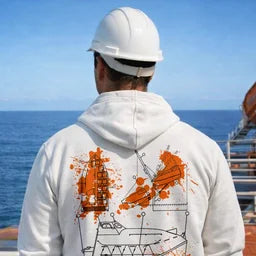
Public rooms and open decks get cold, and the air conditioning inside is aggressive. A hoodie or a crew-neck layer keeps you comfortable without treating the ship like a costume party.
Bring one more layer than you think you need. Every cruise ship is colder inside than the brochure suggests. If you want a layer that says something real instead of a ship-logo souvenir, read Cruise Hoodie With Meaning.
Your own water bottle
A refillable bottle is the quietest crew-friendly item in your luggage. Every glass you pick up at the buffet or the pool bar has to be collected, carried, washed, and restocked by somebody. On a sea day with a full pool deck, bar waiters and utility crew clear glassware for hours. Wind knocks half-full glasses off sunbed tables. Bare feet find the pieces.
One bottle, filled at the buffet station and kept with you, pulls a steady stream of those pickups out of the loop for the whole voyage. Most cruise lines allow empty refillable bottles through terminal security. Check your line's policy before you pack a large one.
A compact towel, and towel discipline at the pool
Keep wet gear under control after pool time or a shore excursion. Wet towels left in corridors, over railings, or on furniture become somebody's job.
The pool deck runs on the same logic. Return ship towels to the drop point instead of draping them over a deck chair as a claim marker. Pool attendants spend part of every sea day clearing chairs that were reserved with a towel at seven in the morning and never used.
For the full answer on ship towels, read Do You Need to Bring a Towel on a Cruise?
Keep your cabin workable
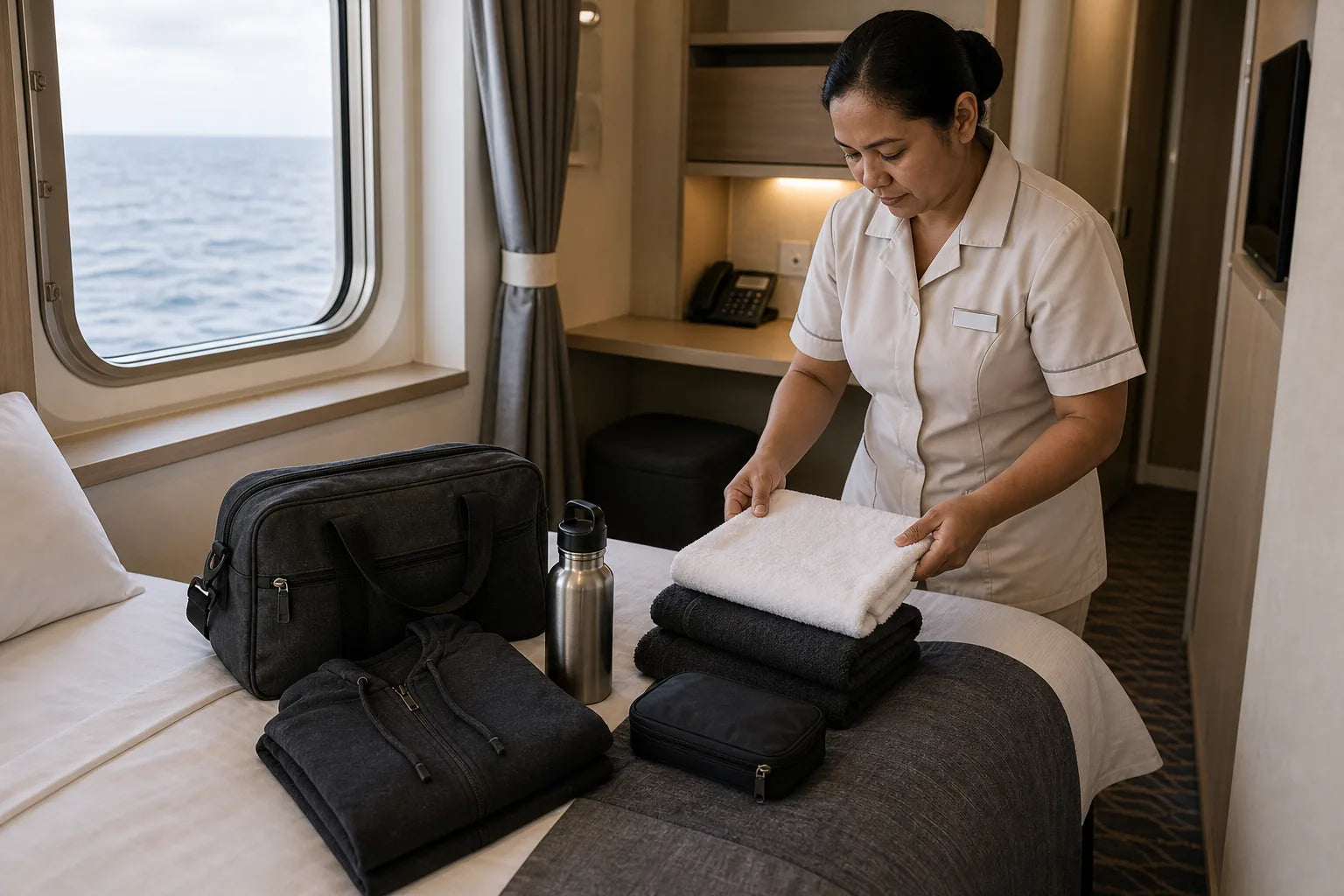
Your cabin steward services a fixed block of cabins on a schedule, usually twice a day, worked around your routine. Cruise lines do not publish a standard time budget per cabin, and this article will not invent one. The honest version is simple: the budget is tight, and everything on the floor eats into it.
You are not expected to clean your own cabin. Just make it workable. Bags off the bed before you leave in the morning, trash in the bin instead of beside it, towels you will reuse hung up instead of dropped. Ten seconds for you. Real minutes for the steward, multiplied down a corridor of cabins.
Cruise essentials at the gangway
Port days are where packing habits become visible. Security at the gangway screens every person coming on or off, guest and crew alike, under the ISPS Code, the international rules for ship security. The line moves at the speed of the slowest bag.
A lanyard or card holder solves most of it. Ship card out before you reach the scanner. Photo ID with it in ports that ask for one. Phone, wallet, and medication in the day bag, not loose in your hands. The security officer scanning cards will do this hundreds of times before the ship sails again. Be the guest who takes four seconds.
Two more gangway habits. Know the all-aboard time, and know that it runs on the ship's clock, which is not always the local clock. Gangway officers have watched guests sprint down a pier over that one detail.
Your cabin number and your muster station
Know both before you need them. The muster drill before departure is not a formality. It is a SOLAS requirement, and the crew running it have done it a hundred times with people who were not listening.
If the general alarm sounds, seven short blasts and one long, you go to your muster station. Not to your cabin. Not to the bar. That is the entire point of the drill.
Tipping, gifts, and what crew can accept
Automatic gratuities on large cruise lines are shared across housekeeping, dining, and galley teams, and for many service roles they are a planned part of pay rather than a bonus on top. If something went wrong, take it to guest services and let them fix it. Removing the automatic gratuity punishes a long list of people, most of whom you never saw.
Small gestures are welcome, inside limits. Most lines run compliance rules on what crew may accept, so an expensive gift can put a steward in an awkward spot instead of a good one. Ask before you give anything physical. What always works: learn names, write them down, and use them in the post-cruise survey. Crew consistently say those named mentions get read, and that they follow a person into evaluations, contract after contract.
One more thing worth knowing as a guest. The people serving your dinner work under contracts governed by the Maritime Labour Convention, 2006, the international standard for seafarer employment. There is a free browser tool, the MLC Contract Check, that crew use to check a contract clause by clause before sign-on. You will never need it yourself. Knowing it exists changes how you read a name tag: a professional under contract, not scenery.
 Free crew appSeafarer Contract CheckCheck your contract clause by clause against MLC 2006 and flag state regulations. The check is free. On iPhone, Android or in the browser.
Patience at embarkation and on tender days
Embarkation day is turnaround day. The crew who welcome you aboard in the afternoon started before dawn: a full changeover of guests, cabins stripped and turned, stores craned aboard, safety checks run, all inside one port stay. If boarding pauses, some link in that chain is still moving. A coffee in the terminal beats an argument at the check-in desk.
Tender ports are the same lesson on water. Tenders are the ship's own boats, run by deck crew, and they load to a fixed capacity in whatever sea state the anchorage offers that day. The queue is not a service failure. It is a small-boat operation run safely. Crew on cargo ships would recognize the discipline instantly. If you are curious how the two worlds compare, read Cruise Ship Life vs Cargo Ship Life.
The most important cruise essential is not in your suitcase. It is listening when crew give instructions, and not asking a cabin steward to break a rule that could cost them their contract.
Wear the signal with respect
7SHORT1LONG® is named after that emergency signal. For guests, wearing it should mean one thing: respect for the people behind the voyage.
That works at the pool as well as at dinner. A pair of world cruise flip flops for the sea day, or a mermaid club nautical t-shirt that nods to ship life without pretending you work it. If you are packing for someone else, there is a separate guide to gifts for cruise guests who support crew.
If you want the fuller picture of what respect for cruise crew looks like in practice, read Support the Crew Behind Your Cruise.
Source note
The muster drill requirement comes from SOLAS, the International Convention for the Safety of Life at Sea, maintained by the International Maritime Organization. Ship and port security screening follows the ISPS Code, also administered by the IMO. Crew employment standards, including contracts, wages, and repatriation, are set by the Maritime Labour Convention, 2006 of the International Labour Organization. Gratuity and gift policies differ by cruise line; check your line's published policy for specifics. This article is editorial context for guests, not legal advice.
FAQ
What should I pack for a cruise?
A warm layer, a refillable water bottle, a compact towel or dry bag, a day bag, a lanyard or card holder for your ship card, your documents, and your medication. The ship provides most of the rest.
Do I need to bring a towel?
Not for normal shipboard use. A small quick-dry towel is useful for independent shore excursions and beach days.
Should I bring my own water bottle on a cruise?
Yes. A refillable bottle is one of the most useful cruise essentials: fill it at the buffet stations and you cut down the glassware the bar and utility crew collect all day. Most lines allow empty bottles through terminal security.
Is the muster drill mandatory?
Yes. It is required under SOLAS, the international convention for safety of life at sea. Attendance is tracked.
Can I give a tip or gift directly to a crew member?
A cash tip handed over with thanks is generally fine, but most cruise lines limit what crew may accept as gifts, so ask before giving anything physical. Naming crew members in the post-cruise survey is always allowed and matters for their evaluations.
Why does boarding a cruise ship take so long?
Embarkation day is a full turnaround: disembarkation, cabin changeover, storing, and security screening under the ISPS Code all happen in one port stay. The queue is the visible end of that operation, not a staffing failure.
YES, WE ARE CREW.
Gear for the watchSafety at Sea Collection · Seafarer T-ShirtsBuild your Sign On Set · Build your Sailor Set