Martin Lex is the pen name of the 7S1L safety desk: SOLAS, lifesaving and firefighting gear, muster drills, emergency signals and safe work on board. Portrait is illustrative.
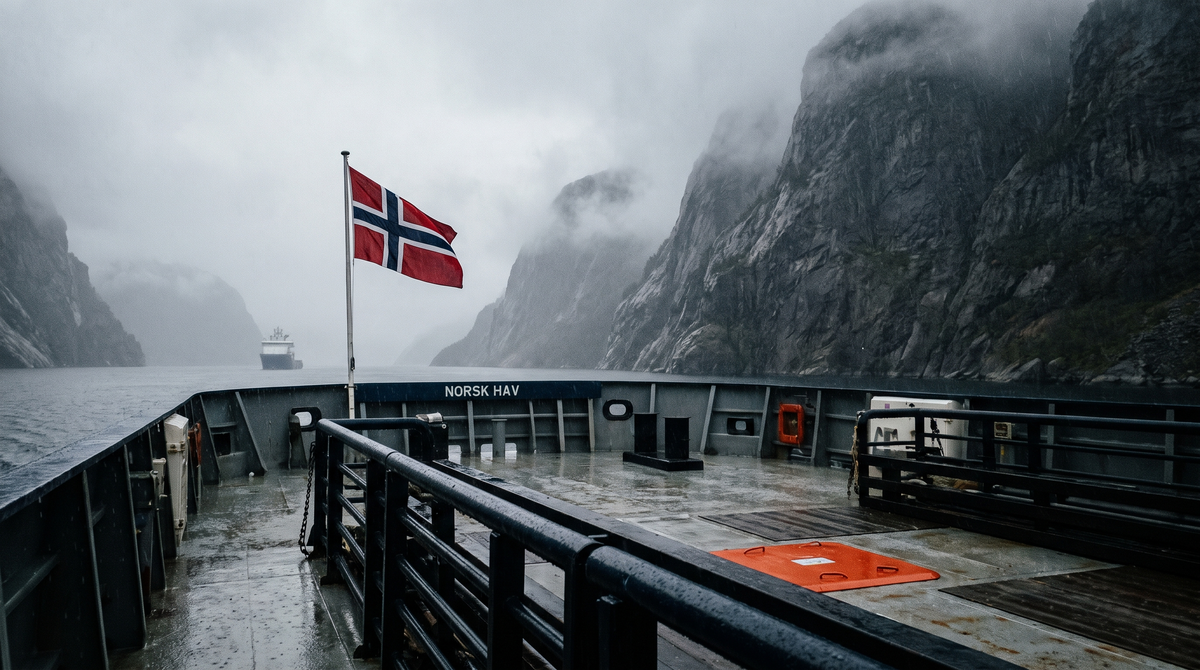
Norway keeps two registers. NOR is the home register, full Norwegian conditions, coastal trade allowed. NIS, the Norwegian International Ship Register, was created in 1987 with a stated purpose the administration still publishes: keep Norwegian-owned ships under the flag by opening them to foreign crew on their homeland's pay conditions. If your contract names NIS, three sections of the founding act shape your job.
That is why Norway NIS flag labor law reads like a split system. The frame is Norwegian: the NIS Act, the Ship Labour Act of 2013, Norwegian courts. The content is negotiated: wage scale, overtime rate and parts of the termination protection come from the collective agreement your contract names, usually built for your home labor market. An AB from Manila and an AB from Bergen can stand the same watch under different pay scales. Both contracts are legal.
Before you sign a contract under the Norwegian flag, know which laws apply. You can check your seafarer contract free in the Seafarer Contract Checker against MLC 2006 and the verified Norway flag facts.
Section 6: who bargains, and in which currency
All pay and working conditions on an NIS ship must be fixed in a collective agreement that expressly applies to NIS service, and that agreement may be concluded with a Norwegian or a foreign trade union. Norwegian unions get a seat at the table; they do not get exclusivity. In practice an Indian or Filipino rating on an NIS tanker sails under an agreement negotiated for his home market. Your SEA must state that Norwegian law and Norwegian courts govern, though you may also sue in your country of residence. The agreement your contract names is your real wage law. Get its name, get the scale.
So ask at the crewing office: which collective agreement covers this ship for NIS service, and which union signed it? The answer sets your wage scale, overtime rate and leave terms. If the agent cannot name the agreement, that silence tells you something about the operation.
Then get the scale for your rank in writing, in the currency the agreement uses; many NIS agreements run in US dollars. Match the wage line in your SEA against that scale before you fly out, not in the mess room after sign-on. Check the tour length too, against what a normal seafarer contract duration looks like.
Section 8: the protections that can be signed away
The Ship Labour Act of 2013 protects everyone on Norwegian ships, on paper. On NIS ships, Section 8 of the NIS Act allows the collective agreement to deviate from a listed set of its provisions, including parts of the termination protection chapter and the preferential right to re-employment. On a NOR ship those rules are binding. On an NIS ship they are negotiable, away. Overtime is Section 7: the rate for work beyond ordinary hours shall be agreed between the parties. The statute names no floor beyond the MLC's. The number in your agreement is the number.
Read that again from a rating's chair. On an NIS ship the termination terms that count are the agreement's, and they can be weaker than the statute. Study that clause before sign-on: notice periods, grounds, what happens if the ship is sold mid-contract. The reading habit that catches red flags in a seafarer employment agreement applies here, only the baseline is the agreement, not the act.
On wages the floor is international, not Norwegian. No Norwegian statutory minimum waits under an NIS contract, only the MLC framework and the ILO figure behind it, covered in our breakdown of the seafarer minimum wage in 2026. Everything above that floor lives in the agreement.
Section 4: where the ship may not go
NIS ships may not carry cargo or passengers between Norwegian ports, may not run scheduled passenger service between Norway and abroad, and the act counts oil and gas installations on the Norwegian shelf as Norwegian ports. Breaking the trading limits can get the ship fined and deleted from the register. That is why the North Sea shuttle and supply jobs sit under NOR terms, and it tells you something honest: Norway fences its own coast off from the cheaper register it created.
For a job seeker this sorts the market before any interview. Shuttle tankers, supply vessels and coastal runs are NOR territory. The deep-sea fleet is where NIS contracts live: car carriers, chemical tankers, gas carriers in worldwide trade.
How Norway NIS flag labor law handles MLC compliance
Norway ratified the Maritime Labour Convention, 2006 on 10 February 2009, the first European country to do so. Implementation runs through the Ship Labour Act of 2013 and its regulations, with the Norwegian Maritime Authority in Haugesund as flag administration for both registers.
In practice the full MLC paper trail exists on NIS ships and gets inspected. Ships of 500 gross tonnage and over in international trade carry a Maritime Labour Certificate, with the DMLC stating how each requirement is met. Your signed SEA, wage accounts and rest hour records sit inside that system, and Paris MoU port state control boards against it. Section 8 flexibility works above the MLC floor, never below it: repatriation, medical care, a written agreement and monthly wage payment stay untouchable.
 Free crew appSeafarer Contract CheckCheck your contract clause by clause against MLC 2006 and flag state regulations. The check is free. On iPhone, Android or in the browser.
The standing of the flag
NIS is not on the ITF flag of convenience list, and Norway ranks third on the current Paris MoU White List. The fleet has drifted down, from 744 ships at the start of 2025 to 723 by spring. Enforcement of the MLC floor is solid, the administration answers, and the verified contacts are on our Norway (NOR / NIS) flag page. How NIS compares with DIS, the German register and the French RIF: the flag on the stern decides the law in your contract.
The ITF list names 48 declared flag of convenience registries. Two European second registers are on it, the German International Ship Registry and the French International Ship Registry. NIS is not, and neither is the Danish DIS. Malta, the largest EU flag, is on the list; what that means at sign-on is covered in our article on Malta flag labor law. NIS holds an odd position: built to compete with open registers on crew cost, run with the enforcement habits of a traditional flag state.
Before you sign: the NIS checklist
Confirm which register, NOR or NIS, because the rights differ at the root. Then work through the rest with the collective agreement open next to the SEA:
- Get the collective agreement by name, confirm it expressly applies to NIS service, and ask which union signed it.
- Match your rank's wage scale in the agreement, currency included, against the wage line in your SEA.
- Check the overtime rate. Section 7 sets no statutory figure, so the agreement's number is the only number.
- Read the termination clause and notice periods. Under Section 8 the agreement's version can replace the Ship Labour Act's.
- Confirm the governing law line names Norwegian law and Norwegian courts, with the option to sue at your place of residence.
- Confirm the tour length and relief plan against what the agreement allows.
- Save the flag state contacts from the Norway flag page. A complaint moves faster with the right address in your phone.
Sign-on day looks the same under either register: bags at the gangway, papers checked, a muster card across the desk. North Sea runs are cold; plenty of crew pack a European sailor hoodie or something from the seafarer hoodies line for deck evenings. What matters is that the folder holds a contract that says what you think it says.
The 90 second version
This flag in one video:
How the Norway (NOR / NIS) flag rates in port state control
Port state control keeps score on every flag. The regional inspection regimes publish each year which registers get detained most, and the ITF keeps its own list of flags of convenience. This is where Norway (NOR / NIS) stands on the current lists:
- Paris MoU (Europe and Canada): white list, rank 3 of 69, performance list valid July 1, 2026 to July 6, 2027.
- Tokyo MoU (Asia Pacific): high performance, inspections and detentions 2022 to 2024.
- ITF: not listed as a flag of convenience, 2025 list.
- MLC 2006: party to the Convention.
These lists count detentions, not contracts. A white list flag can still sit under a bad SEA, and a black list flag tells you how much backing to expect from the administration when something goes wrong on board. The current rating of every flag we cover stands on the Norway (NOR / NIS) flag page, and the app report names MLC 2006 plus the flag at the top of every check, with the same rating next to it.
Source note
Primary sources: the NIS Act of 12 June 1987 No. 48, the Norwegian Maritime Authority: background and terms, the Ship Labour Act 2013, and the Paris MoU performance lists. Norway's MLC ratification of 10 February 2009 is recorded by the ILO; the current flag of convenience list is published by the ITF.
This article is editorial context for crew, not legal advice. For a dispute under a live contract, go to your union, the ITF inspector in port, or the flag state contacts above.
FAQ
Is the Norwegian NIS flag a flag of convenience?
No. The ITF list of declared flag of convenience registries names 48 flags; NIS is not one of them, and neither is the Danish DIS. The German and French international registries are.
What labor law applies on a Norway NIS-flagged ship?
Norwegian law: the NIS Act of 1987 and the Ship Labour Act of 2013, under Norwegian courts. Section 8 lets the collective agreement deviate from listed protections, so the agreement named in your contract carries much of the real content.
How much do seafarers earn under the NIS flag?
There is no single NIS wage and no Norwegian statutory minimum for NIS crews. Pay follows the collective agreement for your rank and home market, above the MLC floor. Get the scale in writing before sign-on.
What is the difference between NOR and NIS?
NOR is Norway's home register: full Norwegian conditions and access to coastal trade. NIS is the international register: foreign crew on collective agreement terms, barred from Norwegian coastal trade.
Does MLC 2006 apply on NIS ships?
Yes. Norway ratified it on 10 February 2009, first in Europe, and the Norwegian Maritime Authority certifies and inspects ships against it. The MLC minimums cannot be bargained away by any collective agreement.
7SHORT1LONG® is a Seafarer Identity Brand. A fjord-clean flag can still carry two classes of crew.
YES, WE ARE CREW.
Gear for the watchSeafarer T-Shirts · Crew Best SellersEuropean Sailor Set · Build your Sailor Set