Martin Lex is the pen name of the 7S1L safety desk: SOLAS, lifesaving and firefighting gear, muster drills, emergency signals and safe work on board. Portrait is illustrative.
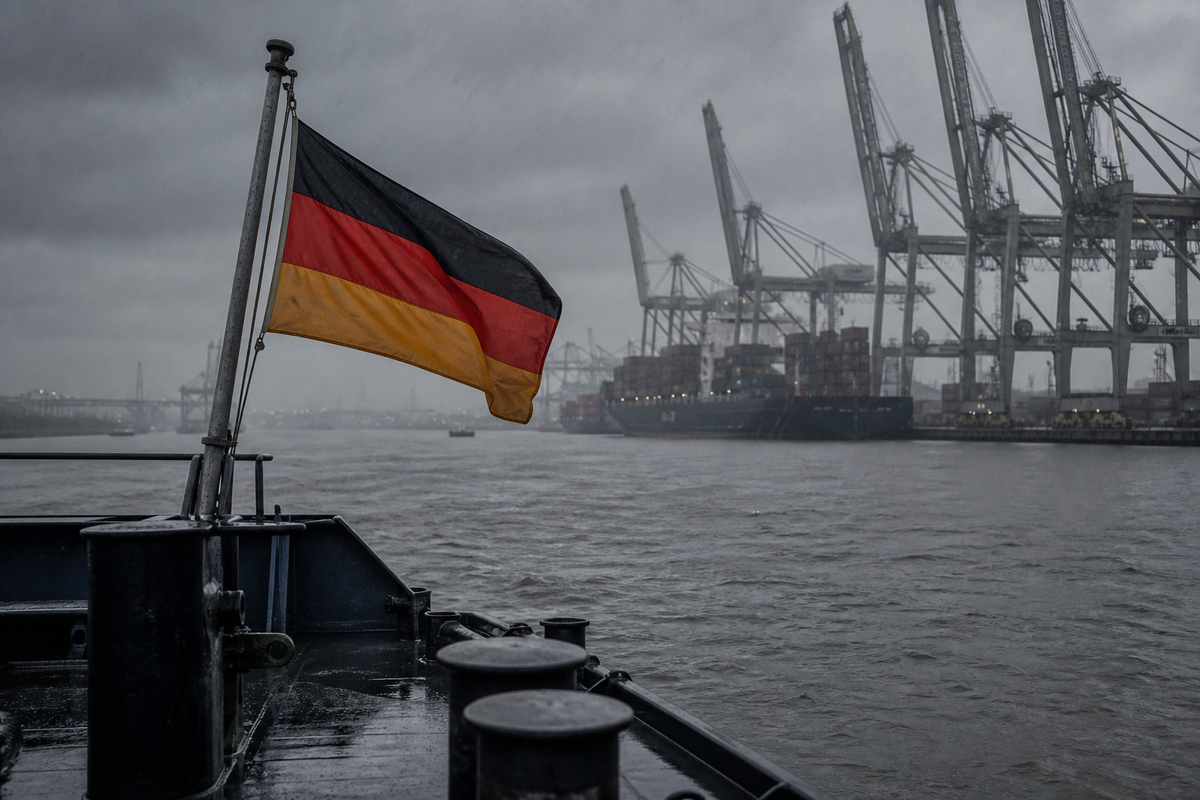
In 1993 the European Court of Justice decided a case about Filipino radio officers on German ships who were paid home country wages while their German shipmates earned German scales. The court held the arrangement was not illegal state aid. The case was Sloman Neptun, the arrangement was Germany's International Shipping Register, and every European second register since has leaned on that judgment. If you sign under the German flag as a non-resident, you are signing inside that structure.
German flag labor law splits at exactly that point: one flag, two registers, two wage worlds. In German paperwork the second register is the Internationales Seeschifffahrtsregister, ISR. In English it runs as the German International Shipping Register, GIS. Same register, two abbreviations.
Before you sign a contract under the German flag, know which laws apply. You can check your seafarer contract free in the MLC Contract Check against MLC 2006 and the verified Germany flag facts.
Two layers of German flag labor law
The base layer is good: the Seearbeitsgesetz, the Maritime Labour Act of 2013, implements the MLC for every German-flag ship and goes past the floor in places. The second layer is the carve-out. The International Shipping Register, GIS, created in 1989, provides that the employment contracts of crew without German residence are not governed by German law merely because the ship flies the German flag. The administration says it plainly on its own site: foreign seafarers can be employed on German ships at the wage conditions of their home country. The ITF lists the GIS as a flag of convenience for exactly this reason, while Germany's first register is not listed.
The legal hook is Section 12 of the Flaggenrechtsgesetz, the German Flag Act. GIS registration is voluntary and open to German-flag ships in international trade. Once a ship is entered, the owner can put an AB from Manila or a fitter from Odesa on a contract governed by the law of their home country. Wages, overtime rates, leave pay: all of it follows that contract, not the German scale the chief mate may be on.
What this means at the gangway is worth saying slowly. Two crew members on the same ship, standing the same watch, can sign under two different legal systems. Your SEA names its governing law somewhere, usually near the end, in one sentence. Find it. If that clause names Philippine, Indian, or Ukrainian law, you are on GIS terms, and the wage annex next to it is the whole deal. The clauses that should stop you are the same on every flag: red flags in a seafarer employment agreement walks through them.
What every crew member keeps
The carve-out moves wages and collective bargaining, and it does not empty the ship of German law. The mandatory core still applies to everyone on board: MLC minimum standards, accommodation and medical care, working hours, repatriation, and a sick pay rule better than most open registries, full wages for six weeks of illness with continued cover up to sixteen weeks. Also worth knowing: the German wage scale, the HTV See, applies only where the owner is in the owners' association and you are in the union ver.di, or where your SEA incorporates it. Membership and paperwork, not the flag, decide the scale.
The sick pay mechanics are where the German flag beats the open registries outright. Under Section 104 of the Seearbeitsgesetz a sick or injured crew member keeps full wages at least until the day of leaving the ship. After that, German wage continuation rules carry the full wage for six weeks. When those run out, the shipowner still owes an amount at sickness benefit level for up to sixteen weeks from the start of the incapacity. Medical care itself is the shipowner's cost under Section 99, on board and ashore, until recovery or until the condition is declared permanent. Most open registry contracts stop far earlier. The difference is real money in a real hospital.
Hours are fixed in Section 48: no more than 14 hours of work in any 24 hour period, no more than 72 hours in any seven days, at least ten hours of rest per day. Those are the MLC lines, but here they are national statute with an inspectorate behind them. The wage floor is separate: GIS contracts commonly track the ILO minimum wage machinery, and the current figures are in seafarer minimum wage 2026.
How the German flag handles MLC compliance
Germany ratified the MLC in 2013 and wrote it into national law the same year through the Seearbeitsgesetz. On a German-flag ship an MLC breach is therefore not an abstract convention problem. It is a violation of German statute with an authority attached.
That authority is the Ship Safety Division of BG Verkehr in Hamburg, the flag state inspectorate. It surveys German-flag ships against the Seearbeitsgesetz and issues the Maritime Labour Certificate and the DMLC that every merchant ship of 500 GT and above on international voyages has to carry. Smaller ships and domestic tonnage are inspected on a three year cycle instead. The registers themselves, first register and GIS both, are kept by the BSH, the Federal Maritime and Hydrographic Agency. Two agencies, one flag. For complaints about conditions on board, the Ship Safety Division is the flag state address.
Why an EU flag sits on the ITF FOC list
The ITF list of flags of convenience currently names 48 registries, declared by its Fair Practices Committee. Most are there for the classic reason: the real owners sit somewhere other than the flag state. Panama, Liberia, the Marshall Islands. The GIS is listed for a different reason. The ownership is German. The labor law is not, because the register cuts non-resident crew loose from German wage law. That severing is what the ITF objects to, so the second register is listed and the first is not.
The GIS has company: the French RIF (listed by the ITF as FIS), Madeira's MAR, and the Faroese FAS sit on the same list for the same construction. Cyprus and Malta are on it too, as whole flags rather than second registers; that story is in Cyprus flag labor law. How the whole family works: flags of convenience and the law in your contract.
One practical consequence: ITF policy for FOC tonnage is coverage by an ITF-approved collective agreement. Where a GIS ship carries one, its scale sits on top of the home country contract. Ask the crewing agent whether the ship is covered. Ask in writing.
 Free crew appSeafarer Contract CheckCheck your contract clause by clause against MLC 2006 and flag state regulations. The check is free. On iPhone, Android or in the browser.
Before you sign: the German flag checklist
Run these checks before your seaman's book goes on the table. The verified contacts sit on our Germany flag page. On port state control Germany stands 13th on the current Paris MoU White List.
- Register first. Ask whether the ship is in the first register or the GIS. The wage law follows the answer.
- Governing law clause. Find the sentence in the SEA that names the applicable law. On GIS terms it should name your home country's law in writing, not by implication.
- Collective agreement. Ask which agreement covers your rank, at which scale, and whether an ITF-approved agreement covers the vessel. The HTV See applies only through membership or express incorporation in the SEA.
- Sick pay clause. Under this flag it should meet or beat the statutory lines: full wages at least to sign-off, six weeks of continuation, up to sixteen weeks at sickness benefit level.
- Repatriation. Destination named, cost carrier named. The MLC entitlement applies on both registers.
- Contract length. The SEA states the duration and the extension tolerance. What counts as normal is in seafarer contract duration.
- Certificate on board. A merchant ship of 500 GT and above must carry the Maritime Labour Certificate and DMLC issued by the Ship Safety Division. Asking to see them is normal, not rude.
Register politics decide the payroll, not the crew. On a GIS ship the mess room holds German officers on HTV terms and Filipino ratings on Manila terms, and they stand the same drills and eat at the same table. 7SHORT1LONG® prints for that table: the European sailor t-shirt and the European sailor set are made for crew who sign under European flags, first register or second.
The 90 second version
This flag in one video:
How the Germany flag rates in port state control
Port state control keeps score on every flag. The regional inspection regimes publish each year which registers get detained most, and the ITF keeps its own list of flags of convenience. This is where Germany stands on the current lists:
- Paris MoU (Europe and Canada): white list, rank 13 of 69, performance list valid July 1, 2026 to July 6, 2027.
- Tokyo MoU (Asia Pacific): high performance, inspections and detentions 2022 to 2024.
- ITF: listed as a flag of convenience (German International Ship Registry (GIS) only), 2025 list.
- MLC 2006: party to the Convention.
These lists count detentions, not contracts. A white list flag can still sit under a bad SEA, and a black list flag tells you how much backing to expect from the administration when something goes wrong on board. The current rating of every flag we cover stands on the Germany flag page, and the app report names MLC 2006 plus the flag at the top of every check, with the same rating next to it.
Source note
deutsche-flagge.de: the GIS register, deutsche-flagge.de: maritime labour law under the German flag, Seearbeitsgesetz (English translation), ECJ Case C-72/91, Sloman Neptun, ITF FOC list, and Paris MoU performance lists. This article is editorial context for crew, not legal advice. For a live dispute, the Ship Safety Division and your union are the working addresses.
FAQ
Is the German flag a flag of convenience?
The first register is not. The German International Shipping Register (GIS) is: the ITF's Fair Practices Committee lists it among 48 FOC registries because it lets owners employ non-resident crew outside German wage law.
What labor law applies on a German-flagged ship?
The Seearbeitsgesetz, Germany's MLC implementation act, applies to every ship under the flag. On GIS ships the employment contracts of crew without German residence can be governed by home country law, so wages and bargaining follow that law while the MLC core still applies to everyone.
What is the German International Register (ISR or GIS)?
A second register created in 1989 under Section 12 of the German Flag Act. Ships stay under the German flag, but crew without German residence can be employed at the wage conditions of their home country.
Do foreign seafarers get German wages on German ships?
Not automatically. The German scale (HTV See) applies through union and owners' association membership or express incorporation in the SEA. On GIS terms the default is the home country wage level, plus any collective agreement that covers the ship.
7S1L is a Seafarer Identity Brand. A court settled the owners' question in 1993. Yours gets settled at sign-on.
YES, WE ARE CREW.
Gear for the watchSeafarer T-Shirts · Crew Best SellersEuropean Sailor Set · Build your Sailor Set