Martin Lex is the pen name of the 7S1L safety desk: SOLAS, lifesaving and firefighting gear, muster drills, emergency signals and safe work on board. Portrait is illustrative.
Seven short blasts followed by one long blast is the general emergency alarm on a ship. On a cruise ship, ferry, tanker, container vessel, or bulk carrier, that pattern is not background noise. It means stop guessing, listen to the public address system, and follow the instructions given by the crew.
For passengers, the signal usually connects to the muster drill, life jackets, assembly stations, and the route from cabin to muster area. For crew, it connects to training, emergency duties, assigned stations, stairways, radios, fire doors, lifeboats, and the controlled movement of people through a ship that may be under pressure.
That is why the name 7SHORT1LONG® matters to us. It is not a decoration. It is a signal every professional seafarer recognizes.
What happens when the alarm sounds
The exact onboard procedure depends on the ship, company, flag, route, and emergency plan. A passenger ship has different crowd movement problems than a tanker at a terminal or a container ship in bad weather. But the first rule is the same: the bridge and the crew control the message.
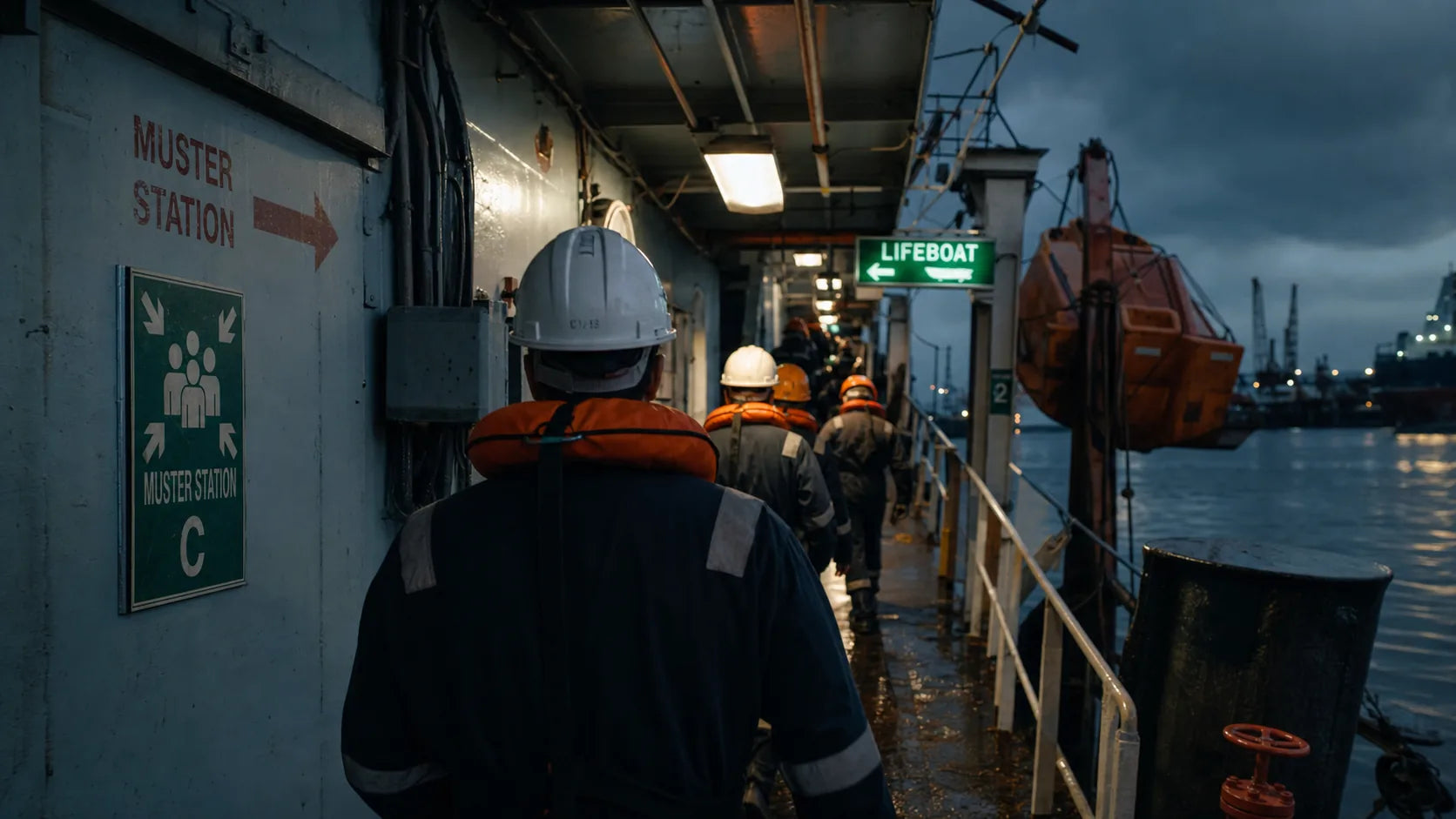
When the alarm sounds, passengers should listen to the announcements, follow posted instructions, and move only as directed. A crew member at a stair tower, corridor, gangway, or muster station is not standing there for atmosphere. That person is part of the ship's emergency organization.
On a working ship, the signal can pull people from cabins, the engine room, the galley, the deck, the bridge, the laundry, the control room, and the mess room. Some crew report to emergency teams. Some control passenger movement. Some prepare life-saving appliances. Some stand by radios, fire equipment, doors, or technical systems.
The signal is short. The work behind it is not.
After the alarm: what crew do, step by step
Company procedures differ, but the skeleton comes from SOLAS and the vessel's own muster list.
First, the alarm itself. The bell or klaxon sounds through accommodation and working spaces, backed by the whistle. The bridge follows with a public address announcement that says what is actually happening: fire, drill, or something else.
Second, everyone already knows where to go. SOLAS Chapter III requires a muster list posted in conspicuous places, including the bridge, the engine room, and the crew accommodation. Against each name stands a station and a duty. An AB may be on a fire squad. An oiler may stay below to secure machinery on the chief engineer's orders. A cabin steward takes a stairway post and moves guests toward their assembly stations.
Third, the count. Heads are counted at each muster station and reported to the bridge. A missing person changes the whole operation.
Then the ship stands down, or it escalates. SOLAS does not define a separate sound pattern for abandoning ship. That order comes from the master, by voice, through the ship's emergency organization. Until then, the job is to hold the station.
None of this is improvised. SOLAS Chapter III requires every crew member to take part in an abandon ship drill and a fire drill every month. Your emergency duty is part of the job you sign for, alongside wages, hours, and repatriation. Before sign-on, the free MLC Contract Check reviews an employment agreement clause by clause against MLC 2006. It takes about a minute and the document stays in the browser.
Why the signal matters to crew
Crew do not hear seven short and one long the way a first-time cruise guest hears it. A guest may hear an unfamiliar alarm. A seafarer hears a pattern tied to drills, certificates, musters, route knowledge, emergency cards, and the old discipline of knowing where to stand when a ship needs order.
That difference matters. A cruise guest might remember where the theater is, where breakfast is served, or where the pool deck is. Crew remember crew-only corridors, escape routes, watertight doors, muster lists, fire zones, and the places where guests can become confused when noise, weather, smoke, darkness, or panic changes the ship.
Good safety culture is quiet most of the time. It lives in repeated drills, signs checked again, radio calls that sound routine until they are not, and crew who know their emergency duties before the public ever notices them.
Cruise ships, cargo ships, and the same safety language
Cruise ship life is different from cargo ship life. A cruise ship carries guests, hotel operations, restaurants, housekeeping, entertainment, excursions, and a large public-facing crew. A tanker, container ship, or bulk carrier usually has a smaller crew and a harder operational focus around cargo, weather, port schedules, maintenance, and watchkeeping.
Still, the safety language has shared roots. SOLAS is the international treaty framework for merchant ship safety, with minimum standards for construction, equipment, and operation. SOLAS Chapter III covers life-saving appliances and arrangements, including lifeboats, rescue boats, and life jackets, with technical requirements in the Life-Saving Appliance Code. The same chapter defines the signal itself: seven or more short blasts followed by one long blast on the whistle or siren, backed by the ship's electrically operated bell or klaxon. It is one piece of the wider system of safety at sea that crew live inside every day.
A cruise ship guest may meet the signal through a muster drill. A deck officer on a cargo ship may meet it through training, drills, and emergency organization. A marine engineer may hear it from below, where machinery noise and distance change how alarms feel. Different ship. Same seriousness.
 Free crew appSeafarer Contract CheckCheck your contract clause by clause against MLC 2006 and flag state regulations. The check is free. On iPhone, Android or in the browser.
How 7 short and 1 long differs from other ship signals
Ships use sound for more than emergencies. The general emergency alarm faces inward: it is addressed to the people on board, and it means muster and await instructions.
Maneuvering signals face outward. Under the COLREGs, one short blast tells another vessel you are altering course to starboard, two short blasts mean port, and five or more short rapid blasts signal doubt. They are bridge-to-bridge navigation signals, used by the officer on watch with no emergency involved.
Ships also carry other internal alarms, such as fire alarm bells and company crew alert codes over the public address system. Seven short and one long stands apart: it is the one signal that calls the entire ship to stations at once. To hear exactly what it sounds like, we keep a recording on our page about the cruise ship emergency alarm sound.
What the signal is not
Seven short and one long is not a reason to film first. It is not a cruise curiosity. It is not the same thing as a casual horn salute in port, and it should not be confused with navigation sound signals used between vessels.
It is also not a security alert. Threats at the gangway or in the terminal run through the vessel's security plan, which is what ship security under the ISPS Code covers.
It is also not permission to invent your own plan. On a ship, movement matters. Stairways, corridors, fire doors, elevators, tender areas, lifeboat stations, and open decks can become choke points. Crew instructions exist because the ship has a plan and people assigned to carry it out.
The best thing a passenger can do is simple: stay calm, listen, and follow the crew. The best thing a crew member can do is what the job already demands: know the station, know the route, know the equipment, and keep the ship organized.
Why 7SHORT1LONG carries the name
7S1L was built from crew identity, not tourist nautical style. The signal is part of the professional language of ships. It belongs to bridge teams, ratings, engineers, cruise crew, cadets, officers, hotel departments, galley teams, and everyone who knows ship life from the working side, not from a balcony.
The name carries awareness, discipline, and crew identity. It points to the world of night watches, drills, delayed shore leave, safety rounds, wet decks, engine noise, port calls, and the people who keep a ship moving when nobody ashore is watching. The pattern itself sits on the Seafarer Emergency Signal T-Shirt and the SOLAS emergency signal snapback cap. Crew read it instantly. Guests have to ask.
7 short. 1 long.
That is the signal.
If you want gear built around maritime safety culture, explore the Safety at Sea collection.
Source note
This article is editorial context about ship safety signals. It is not a substitute for your vessel's muster list, emergency plan, or onboard instructions, and it is not legal advice.
- IMO: International Convention for the Safety of Life at Sea (SOLAS)
- IMO: STCW Convention
- IMO: Convention on the International Regulations for Preventing Collisions at Sea (COLREGs)
FAQ
What does seven short and one long mean on a ship?
It means the ship's general emergency alarm. Passengers should listen to announcements and follow crew instructions. Crew report according to the vessel's emergency plan and assigned duties.
Is 7 short and 1 long only used on cruise ships?
No. Cruise guests often search for it because they hear it during a muster drill, but the signal belongs to wider ship safety culture, not only cruise ships.
What should passengers do when they hear seven short and one long?
Stay calm, listen to the public address system, and follow the instructions from the crew. Do not block stairways, crew-only areas, gangways, or muster routes.
Is seven short and one long the abandon ship signal?
Do not treat it as permission to abandon ship. SOLAS does not define a sound pattern for abandoning ship. That order comes from the master, through the ship's public address and emergency organization.
How is the general emergency alarm different from ship horn signals at sea?
Horn signals between vessels are navigation signals under the COLREGs, such as one short blast for a course change to starboard. Seven short and one long is an internal alarm under SOLAS that calls everyone on board to muster stations and instructions.
Why is the brand called 7SHORT1LONG?
The name comes from the emergency signal recognized by professional seafarers. For the brand, it represents crew identity, safety awareness, discipline, and life at sea.
YES, WE ARE CREW.
Gear for the watchSafety at Sea Collection · Seafarer T-ShirtsBuild your Sign On Set · Build your Sailor Set