
Martin Lex is the pen name of the 7S1L safety desk: SOLAS, lifesaving and firefighting gear, muster drills, emergency signals and safe work on board. Portrait is illustrative.
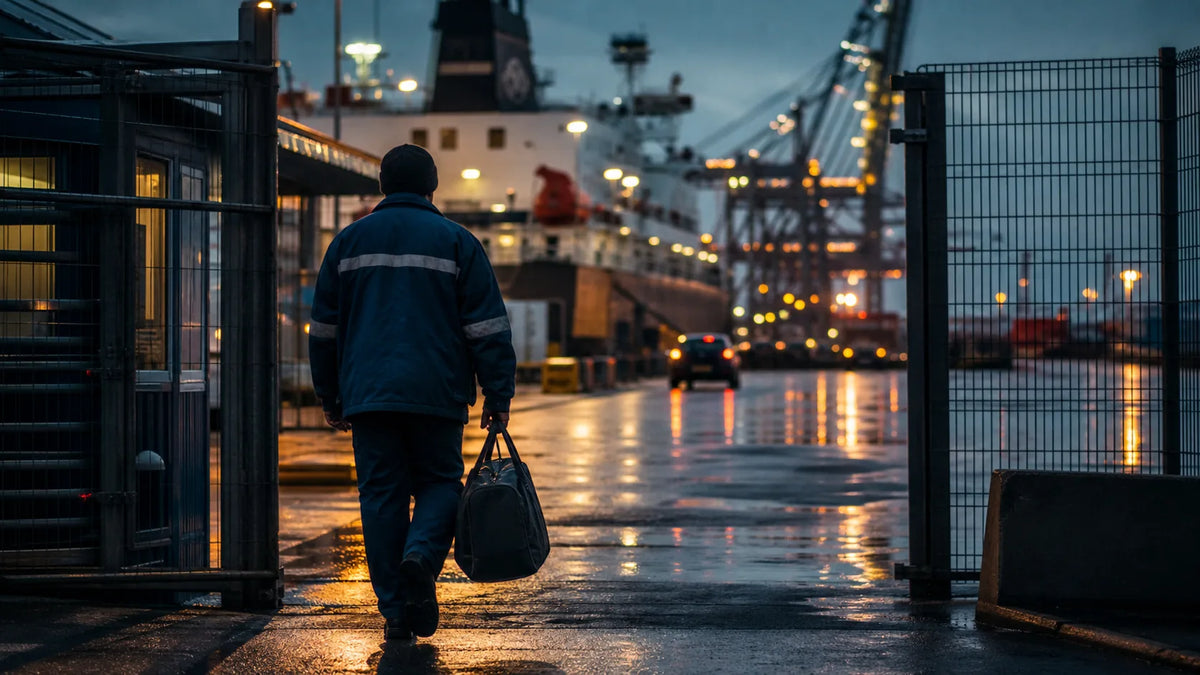
Shore leave is not a luxury extra. It is seafarer welfare in its simplest and cheapest form: a few hours off the ship, on ground that does not move, among people who are not your watch.
For seafarers, time ashore can mean a phone signal, a pharmacy, a seafarer center, a chapel, a money transfer, a meal away from the ship, a call home, a walk, a haircut, a doctor visit, or one quiet hour without engine noise and ship routine.
This article is about the welfare side of that: what a few hours ashore actually do for a crew member, why those hours are disappearing, and who is fighting to keep them. If you want the basics first (what shore leave is, who approves it, what to expect between gangway and gate) start with our guide to what shore leave is and how it works. This page picks up where that one ends.
Short does not mean unimportant.
What shore leave gives back
Shore leave gives seafarers contact with ordinary life. After watches, cargo operations, guest service, drills, inspections, and long contracts, stepping through a port gate can reset something that the ship cannot.
It may not be glamorous. It may be a bus ride to a seafarer center, a grocery run, a call from a parking lot, or coffee before returning to the gangway. It still matters.
The reason is simple. A ship is workplace, bedroom, mess room, and gym inside one hull. An oiler on six-on, six-off shares his entire world with the same twenty people for months. Ashore, for two hours, nobody needs anything from him. No radio call. No alarm panel. No main engine under the deck plates. That pause is not sentimental. It is recovery from workload, and a contract offers very few other forms of it. Our guide to mental health for seafarers covers what happens when that recovery is missing for months at a stretch.
Shore leave and seafarer welfare: what the numbers show
The decline is measurable. The Seafarers Happiness Index, published quarterly by the Mission to Seafarers, put overall crew happiness at 6.87 out of 10 in the second quarter of 2026, down from 7.18 in the first. Shore leave scored 5.72, the lowest of any category in the survey by a clear margin. The report names the causes: intense schedules, short port stays, and restricted access to ports and terminals.
The longer view is harder. In May 2024, the World Maritime University and the ITF Seafarers' Trust surveyed 5,879 seafarers about time ashore. One in four had not set foot on land during an average contract of 6.6 months. Of those who did get ashore, nearly half spent less than three hours off the ship. The study's own summary called shore leave rare, brief, and in danger of extinction.
Sit with that first number. Six and a half months. Not one hour on land.
Why shore leave is disappearing
Shore leave can be limited by port security, short stays, terminal distance, immigration rules, fatigue, cargo operations, bad weather, company schedule, transportation, cost, or the next watch.
Behind that list sit structural changes. The ITF Seafarers' Trust points to four drivers: smaller crews, growing pressure on turnaround times, tighter security, and ports that have moved far from the cities they once served. Each one alone shaves minutes off a port call. Together they can erase it. When a vessel works cargo in hours instead of days and the terminal sits an hour from town, the math stops working for everyone on board except the ship.
Security is the layer crews feel most directly. Since the ISPS Code entered into force in 2004, every regulated terminal runs on access control: gate passes, escorts, fences along the quay. How that system works, and why it exists, is covered in our article on ship security and the ISPS Code. None of it was written to stop shore leave. In practice, a missing escort or a shuttle that never comes can kill it just as surely as a denied pass.
The United States shows both the problem and a fix. Reports of crews being refused transit through terminals, or charged for it, led to a federal rule: since June 1, 2020, facilities regulated under 33 CFR 105.237 must give seafarers a way between ship and gate without unreasonable delay and at no cost to the seafarer. It took an act of Congress to guarantee a walk to the gate. That says enough.
Immigration and fatigue close the loop. Without the right visa, a crew member may be confined on board no matter what the schedule allows. And after a long cargo watch, six hours of sleep can honestly beat two hours of city. A ship may be in port, but that does not mean the crew are free. Families and guests should understand that difference.
Who fights for shore leave
Seafarer centers, port welfare workers, chaplains, unions, and welfare organizations carry most of this fight. The Mission to Seafarers runs centers and ship visits and publishes the happiness data quoted above. Stella Maris chaplains board ships in ports worldwide. The Deutsche Seemannsmission does the same in German ports and beyond. ISWAN runs SeafarerHelp, a free 24-hour helpline for seafarers and their families. ITF inspectors take up shore leave denials alongside wage cases. In many ports, port welfare committees pull these groups and the port authority around one table.
They can help with communication, transport, advice, worship, rest, or practical services. Offers vary by port: check current local details with the welfare organizations or port welfare contacts.
The ports that get it right share a pattern. A free shuttle that actually runs between berth and gate. A seafarer center within reach of the terminal, open when ships are in. Gate passes arranged through the agent before arrival instead of negotiated at the fence. And chaplains who come up the gangway when nobody can go down it.
Digital shore leave
Phones have changed shore leave. A short stop may be used to download maps, contact family, update banking access, find transport, check welfare contacts, or fix a problem that could not be solved at sea.
That is why the digital side of ship life matters. Apps are not the story. The crew member trying to use a short port window well is the story. A phone that was set up right before joining makes a two-hour window twice as useful: our seafarer phone setup guide and this list of apps for seafarers exist for exactly that window.
What crew can do with a short window
No article fixes turnaround times. But a few habits protect the hours that are still there.
- Decide before arrival, not after. Ask the agent early about shuttle times, gate passes, and the nearest seafarer center.
- If rest allows, go. Ninety minutes on a bench outside the gate beats a perfect plan for a port that never happens.
- Keep a shore bag half packed: documents, cash, phone, power bank. In a warm port, a pair of maritime flip flops by the cabin door saves the first ten minutes.
- Go ashore in your own clothes. Coveralls are the job. A seafarer t-shirt that says who you are, without a company logo on it, is part of the reset.
- Watch the clock like a seaman, not like a tourist. Being back early keeps shore leave alive for the next port and the next crew.
And know what the rules say. MLC 2006, Regulation 2.4, requires that seafarers be granted shore leave to benefit their health and well-being, consistent with the operational requirements of their positions. Your employment agreement should never trade that away. Before sign-on, run the contract through the free MLC Contract Check: it reads the clauses against MLC 2006 in about a minute, in your browser, no account needed.
Respecting shore leave
Guests should not treat crew shore leave as casual free time. Families should not assume a port call means a long video call. Companies and ports should remember that welfare access is part of human life at sea.
Shore leave is one of the places where the world can show whether it sees seafarers as people or only as labor. The numbers above say the world is currently choosing labor. Crews, welfare workers, chaplains, and a few good ports keep choosing people. Whose side the industry lands on is decided gate by gate, escort by escort, port call by port call.
Source note
This article is editorial context on shore leave and seafarer welfare, not legal advice. The figures come from the organizations named below; local conditions change by port and by season.
- The Mission to Seafarers: Seafarers Happiness Index, Q2 2026
- ITF Seafarers' Trust and World Maritime University: shore leave survey, 2024
- US Federal Register: Seafarers' Access to Maritime Facilities (33 CFR 105.237)
- ILO: Maritime Labour Convention, 2006
- ITF Seafarers
- SeafarerHelp (ISWAN)
FAQ
Why is shore leave important for seafarers?
It gives seafarers access to rest, family contact, welfare services, medical needs, port services, and time outside the ship.
Is shore leave a right under the MLC?
Yes. MLC 2006, Regulation 2.4, requires that seafarers be granted shore leave to benefit their health and well-being, consistent with the operational requirements of their positions. In practice, access still depends on schedule, security, and immigration rules.
How many seafarers get no shore leave at all?
In a 2024 survey of 5,879 seafarers by the World Maritime University and the ITF Seafarers' Trust, one in four reported no shore leave during an average contract of 6.6 months, and nearly half of those who went ashore had less than three hours off the ship.
Do seafarers always get shore leave in port?
No. Shore leave can be limited by schedule, port security, immigration rules, fatigue, cargo operations, weather, transport, and duty requirements.
Why can a ship be in port but crew cannot go ashore?
Port stays may be short, duties may continue, security may be strict, and crew may need rest before the next watch or departure.
How can people support shore leave?
Respect crew time, support welfare services, understand port restrictions, and avoid assuming that a port call equals free time.
YES, WE ARE CREW.
Gear for the watchCrew Welfare at 7S1L · Seafarer HoodiesBuild your Sign On Set · Build your Sailor Set