Martin Lex is the pen name of the 7S1L safety desk: SOLAS, lifesaving and firefighting gear, muster drills, emergency signals and safe work on board. Portrait is illustrative.
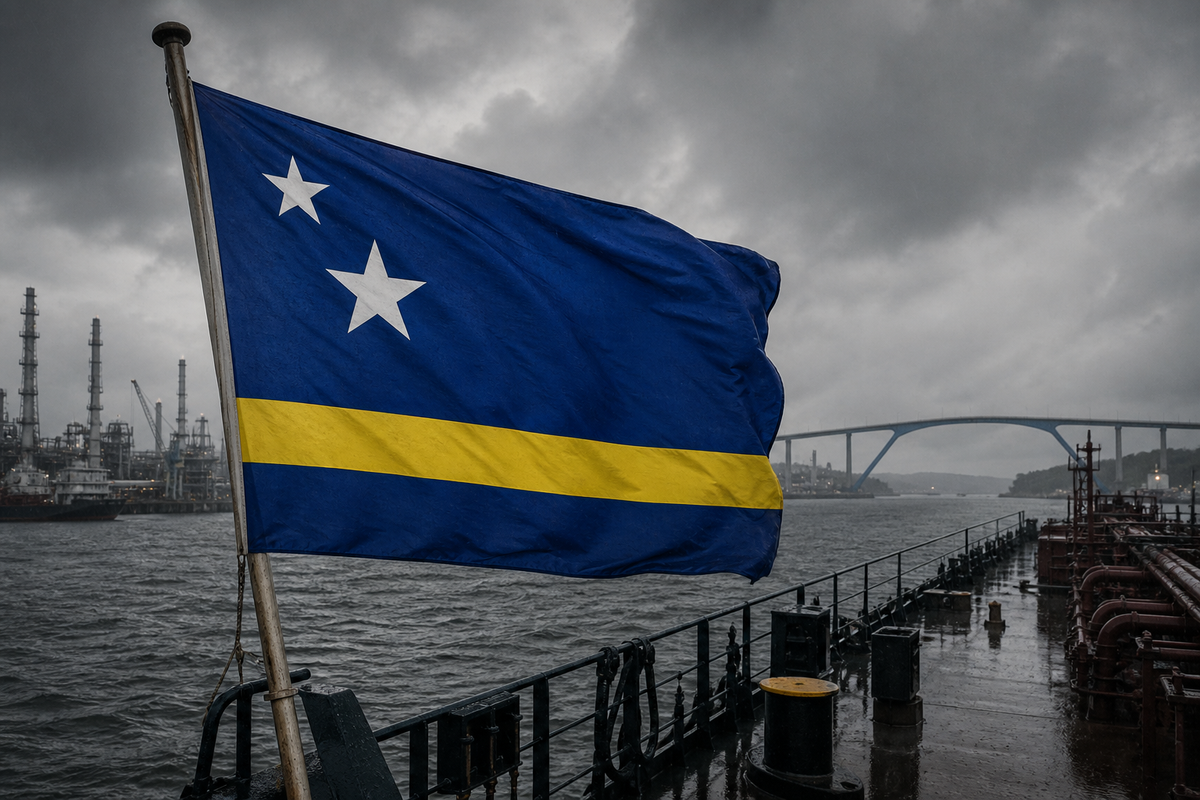
A Curacao-registered ship flies the flag of the Kingdom of the Netherlands and holds Dutch nationality. The register behind it is not Dutch: since the Netherlands Antilles dissolved on October 10, 2010, the Maritime Authority of Curacao in Willemstad has run its own ship register, open to vessels from six gross tons with no age or tonnage limits. The ITF lists Curacao as a flag of convenience. The Dutch flag article in this series describes a different world; do not confuse the two at sign-on, because the tricolor looks identical from the quay. This guide reads Curacao flag labor law the way you will meet it at the gangway: a Kingdom frame above you, a thin local net below you, and a seafarer employment agreement that has to carry the difference.
Before you sign a contract under the Curacao flag, know which laws apply. You can check your seafarer contract free in the Seafarer Contract Checker against MLC 2006 and the verified Curacao flag facts.
Curacao flag labor law: the legal frame
Curacao's maritime legislation builds on Kingdom law: the Shipping Act and Shipping Decree are Kingdom matters, and Curacao vessels must meet the same safety regulations as ships on the Netherlands register. The MLC reached this flag through the Dutch ratification, extended to Curacao with effect from April 2015. So the convention floor stands: written SEA, wage accounts, rest hours, repatriation at the owner's cost, complaint procedures.
What does that mean on deck? The Kingdom layer settles the safety questions: construction, certificates, manning. It does not write your wage line. Your employment terms live in the SEA, and on this register the SEA is given broad room. So the first question to a crewing agent offering a Curacao ship is not about the ship at all: which law governs my employment agreement, and which court or arbitration hears a dispute? If the agent cannot answer that in one sentence, the contract is not ready to sign.
The crewing side is deliberately open. Every crew member on a Curacao ship needs a valid Certificate of Competency, and the register accepts certificates from all STCW member countries. That is why mixed crews are the normal picture on this flag: a Filipino bosun, Indian oilers, a Dutch or Croatian chief officer, all sailing under one tricolor out of Willemstad. Open crewing keeps costs flexible for the owner. For you it means no national wage standard waits behind the contract. The number on your wage line is the number you agreed to.
How this flag handles MLC compliance
Curacao is a country within the Kingdom of the Netherlands, and the MLC reached it through the Kingdom. The Netherlands ratified the Maritime Labour Convention in December 2011, and the convention was extended to Curacao with effect from April 2015. Since then the MLC floor stands on Curacao ships as it stands on any ratifying flag.
Certification runs through the flag administration in Willemstad and the recognized organizations working for it. Under the MLC, ships of 500 gross tons and over on international voyages carry a Maritime Labour Certificate and a Declaration of Maritime Labour Compliance. Ask to see both when you join. The DMLC Part II tells you, in the owner's own words, how the ship claims to meet each requirement: who pays repatriation, how rest hours are recorded, how complaints move. Five minutes with that folder in the ship's office tells you more than any recruitment call. The floor is real. What stands on top of it is answered by your contract, not by Willemstad.
Where the net thins out
Seafarers who do not reside in Curacao are not covered by Curacao's social laws. The registry guidance is open about the consequence: the shipowner is expected to address the crew member's social security in the individual contract. No residence, no system, so the insurance, medical and provident clauses of your SEA are not extras. They are the whole net. The register is also small enough that it does not appear on the Paris MoU performance lists at all, which require thirty inspections over three years. Fewer inspections means the paper you sign gets tested less often by outside eyes, and that raises the value of getting it right the first time.
Turn that into questions you actually ask. Which fund receives contributions in my name, and in which country? What does it pay if I am injured in the engine room and cannot sail for six months? Who covers long-term disability, and who pays the hospital bill after repatriation? On a national flag, part of those answers sits in legislation. On the Curacao register, for a non-resident AB or oiler, every one of those answers has to sit in a clause. A clause that is missing is also an answer: nobody pays.
Rotterdam or Willemstad: two registers, one tricolor
From the quay both ships look Dutch. Same flag, same nationality. The employment worlds differ. The Netherlands register sits inside Dutch labor structures; our Dutch flag labor law article walks through that side. The Curacao register ties the ship to Kingdom safety law but leaves employment terms largely to the contract, and its non-resident crew stand outside local social security. Neither register is automatically the better deal for a rating. A Curacao ship under a strong ITF-acceptable agreement can pay and protect better than a thin contract elsewhere. But the default settings differ, and the default is what catches crew who sign fast in a terminal office while the agent watches the clock. The ship's certificates say Willemstad or they do not.
Before you sign: the Curacao checklist
The night before you fly out, the bag is packed: passport, seaman's book, medical certificate, yellow fever card, the sign-on set folded on top. Put the SEA next to them and work through this list while you still have wifi and time to say no.
- Social security first. Read that clause before the wage table. What scheme, in which country, receives contributions for you, and what exactly does it cover?
- Financial security certificates. Confirm the certificates for repatriation and shipowner liability are posted on board, as the MLC requires, and that your SEA names the provider.
- Wage scale. Check it against an ITF-acceptable agreement if one applies, and against the ILO minimum basic wage. Our seafarer minimum wage guide has the current figures.
- Contract length. The SEA must state a clear term in months. Vague duration language on a lightly inspected flag ages badly at month nine. Our guide to seafarer contract duration explains what counts as normal.
- Governing law and disputes. The contract should name the law that governs it and where a claim is heard. A blank here means the owner chooses later, after the dispute exists.
- Signed original. Take a signed copy of the SEA before you travel and leave a second copy with someone ashore.
- Run the clauses through the checker. The verified administration contacts are on our Curacao flag page.
If any line on that list comes back vague, compare the wording with the patterns in our seafarer contract red flags guide before you board. And keep the wider picture in view: Curacao sits on the ITF list next to much larger registers, and the mechanics that put it there are in our flags of convenience guide.
The 90 second version
This flag in one video:
How the Curacao flag rates in port state control
Port state control keeps score on every flag. The regional inspection regimes publish each year which registers get detained most, and the ITF keeps its own list of flags of convenience. This is where Curacao stands on the current lists:
- Paris MoU (Europe and Canada): not ranked (too few inspections), performance list valid July 1, 2026 to July 6, 2027.
- Tokyo MoU (Asia Pacific): not ranked (too few inspections), inspections and detentions 2022 to 2024.
- ITF: listed as a flag of convenience, 2025 list.
- MLC 2006: party to the Convention.
These lists count detentions, not contracts. A white list flag can still sit under a bad SEA, and a black list flag tells you how much backing to expect from the administration when something goes wrong on board. The current rating of every flag we cover stands on the Curacao flag page, and the app report names MLC 2006 plus the flag at the top of every check, with the same rating next to it.
Source note
Flag facts in this article come from the Maritime Authority of Curacao and its crewing and registration guidance, the Official Guide to Ship Registries entry on Curacao, the ILO record of the Dutch MLC ratification, the ITF FOC list, and the Paris MoU performance lists. This article is editorial context for seafarers, not legal advice. For a live claim or dispute, talk to the ITF, a maritime lawyer, or a welfare organization such as the Mission to Seafarers or Stella Maris.
FAQ
Is Curacao a flag of convenience?
Yes. The ITF's Fair Practices Committee lists Curacao among the 48 registries it declares flags of convenience, meaning beneficial ownership and control commonly sit outside the flag country. The listing does not make every Curacao ship a bad ship. It tells you to read the SEA harder.
What labor law applies on a Curacao flagged ship?
Kingdom shipping law covers safety and registration, and MLC 2006 applies through the Dutch ratification, extended to Curacao in April 2015. Employment terms above that floor come from your SEA and any collective agreement it references, which is why Curacao flag labor law is, in practice, contract law.
Is the Curacao register the same as the Dutch register?
No. Both fly the flag of the Kingdom of the Netherlands, but the Netherlands register and the Curacao register are separate administrations with different employment worlds. Check the ship's certificates to see which register you are actually signing for.
Do seafarers on Curacao ships get social security?
Only residents of Curacao are covered by Curacao's social laws. For everyone else, the shipowner is expected to address social security in the individual employment agreement, so the insurance, medical and provident clauses of your SEA carry the load a national system would normally carry.
Does MLC 2006 apply to Curacao-flagged ships?
Yes, with effect from April 2015 through the Netherlands' ratification. Curacao ships must meet the MLC floor: a written SEA, wage accounts, rest hours, repatriation at the owner's cost, and an onboard complaint procedure.
A contract you have read is quiet gear. It sits in the drawer under your bunk doing nothing, like the seafarer hoodie you keep for the night watch, until the day it is the only thing between you and an owner who stopped answering emails. On this flag, read it that way.
7SHORT1LONG® is a Seafarer Identity Brand. Small flag, quiet water, sharp pen.
YES, WE ARE CREW.
Gear for the watchSeafarer T-Shirts · Crew Best SellersBuild your Sign On Set · Build your Sailor Set