Martin Lex is the pen name of the 7S1L safety desk: SOLAS, lifesaving and firefighting gear, muster drills, emergency signals and safe work on board. Portrait is illustrative.
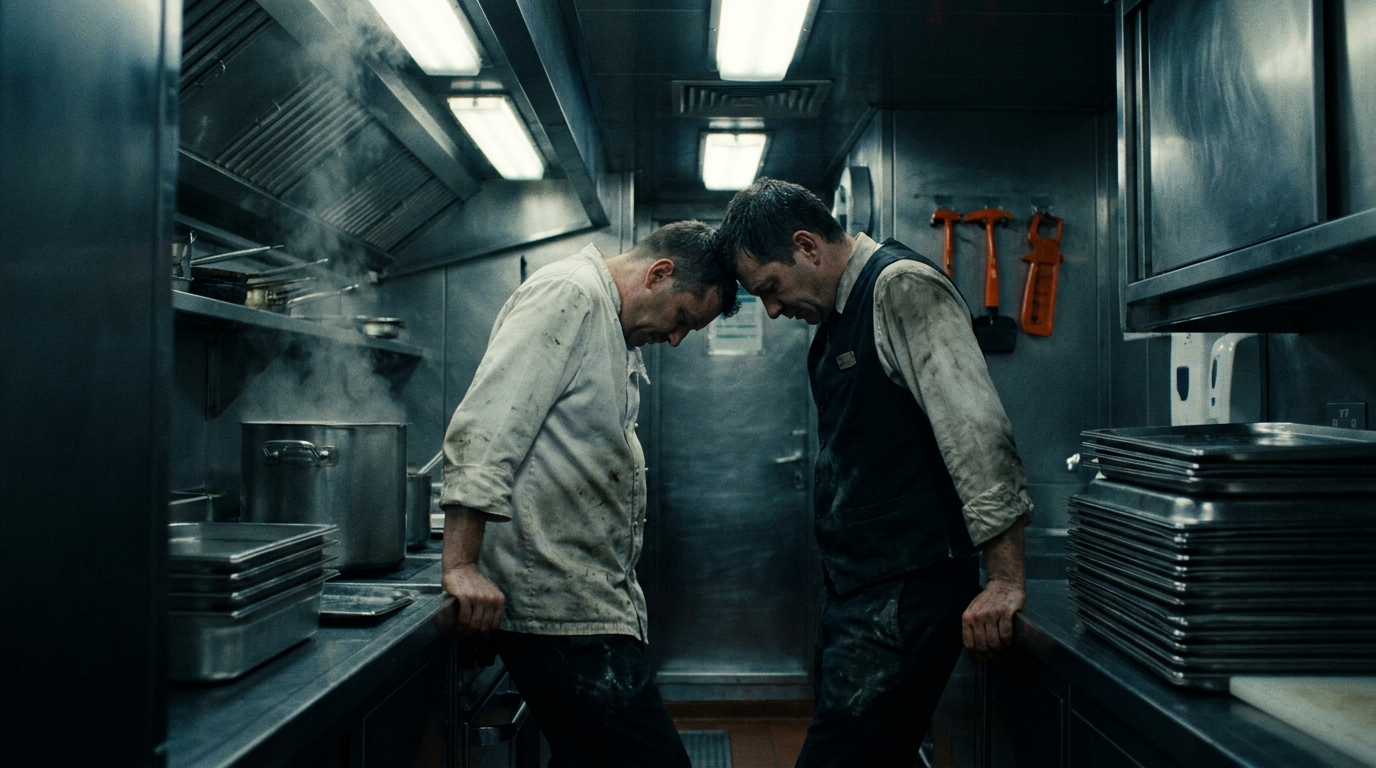
The galley at 05:30. A cabin steward with 18 cabins before lunch. A waiter on his second contract who has not seen daylight from the dining room in four days. None of them steer the ship. All of them are seafarers, and the cruise ship crew contract each one signed is covered by the same convention as the deck crew's.
That word matters legally. The Maritime Labour Convention, 2006 covers everyone working on board a ship it applies to, and that includes the hotel department of a cruise ship: stewards, cooks, waiters, bar staff, spa staff, photographers, musicians. If you work on board, the Convention calls you a seafarer, and it gives you the same contract rights as an AB on a container ship.
What a cruise ship crew contract must contain
MLC Standard A2.1 requires a signed, individual seafarer employment agreement. You are entitled to review it and take advice before signing, and to keep a signed original. On cruise ships the SEA usually points to a collective agreement and to company fleet regulations. Read what the SEA itself says first, because that is the document a port state control officer in Miami or Civitavecchia will ask for.
The Standard also lists what the agreement must state. Your full name and date of birth. The shipowner's name and address, not always the brand painted on the funnel. Your capacity on board: assistant waiter, galley steward, cabin attendant. Wages, or the formula behind them. Paid annual leave. Termination conditions, including notice periods. Health and social security benefits. Your repatriation entitlement. A reference to the collective agreement, if one applies.
Missing items are not small print. A cruise SEA that names no shipowner, no notice period, or no repatriation clause fails A2.1 on its face. Our guide to seafarer employment agreement red flags walks through the clauses that should stop you before you sign.
The hours question, in real numbers
MLC Standard A2.3 sets the limits both ways. Work is capped at 14 hours in any 24 hour period and 72 hours in any 7 day period, or rest is guaranteed at 10 hours in any 24 and 77 in any 7 days. Your contract or its CBA will name one of the two regimes. Turnaround day counts. Embarkation day counts. Safety drills count. If your schedule quietly breaks these numbers week after week, that is not "cruise life", that is a documented violation, and the rest hour records the ship must keep are the evidence.
Hotel crew feel this hardest on turnaround day. Guests off by 09:30, cabins stripped and reset, new guests boarding from noon, the muster drill on top. All of it is work time under A2.3 and belongs in the rest hour record you countersign. Sign what actually happened, not what the template shows.
Wages, tips, and the guaranteed number
Pay in the hotel department is often built from a small basic wage plus service charge or gratuities. The MLC requires wages paid at least monthly with a monthly statement (Standard A2.2). So look for one thing above all: the guaranteed monthly total, written as a number. How the service charge is calculated, when it is paid, and what happens in a month with low occupancy should all be answerable from the SEA and its annexes. A recruiter's spoken estimate of "up to 2,000 with tips" is not a number you can enforce.
The pool differs by company, but the industry pattern is similar. A daily service charge is billed to each guest account, collected by the company, and distributed to eligible hotel crew by position and days worked. Bar teams usually draw from a separate gratuity added to beverage sales. Occupancy moves the total up and down. Nothing obliges a company to run the pool generously. The MLC obliges it to pay what the contract states, on time, with a statement you can check.
Two related points before you sign. The ILO minimum basic wage applies to able seafarers, not hotel ranks, so your wage floor comes from the SEA and its CBA; our post on the seafarer minimum wage 2026 explains the number. And recruitment must be free for you: under MLC Standard A1.4, an agency may not charge you for finding you the job. If someone asked for a placement fee, read our piece on manning agency fees first.
Cabins, rotations, and probation
Cabin sharing is legal on a cruise ship. MLC Standard A3.1 requires an individual sleeping room for each seafarer on ships other than passenger ships. Passenger ships are the exception, which is why two crew to a cabin below the waterline is standard across the industry. The rest of the accommodation rules still apply: berth dimensions, ventilation, sanitary facilities, regular inspections on board. A shared cabin is normal. A flooded, moldy, or overcrowded one is a reportable condition.
Hotel department rotations run long. Six months and more is common for ratings; deck and engine officers often rotate faster. The MLC does not set one contract length, but Standard A2.5 requires repatriation before twelve months of service on board pass. A contract that quietly rolls past a year without a flight home is outside the Convention.
Probation is a contract term, not an MLC term: the Convention does not regulate trial periods, so the SEA or its CBA defines how long it lasts and how either side may end it. Read that clause, then the repatriation clause next to it: even a steward dismissed during probation is entitled to repatriation at the shipowner's cost. Recovering the airfare from wages is only allowed after a formal finding of serious default, not a mood in the crew office.
 Free crew appSeafarer Contract CheckCheck your contract clause by clause against MLC 2006 and flag state regulations. The check is free. On iPhone, Android or in the browser.
Sick or injured on board
Standard A4.2 makes the shipowner liable when you fall sick or are injured while serving under the SEA. Medical care is at the shipowner's expense, including treatment ashore and board and lodging away from home. National law may limit this liability, but to no less than 16 weeks from the day of injury or the start of sickness. Wages continue: full while you remain on board, then in whole or in part after repatriation, as national law or the CBA defines, for at least 16 weeks. Medical care on board must be free of charge to you (Regulation 4.1). Since 2017, ships must also carry financial security certificates covering repatriation and shipowner liability, posted where crew can see them.
A wrist injured by a loaded linen cart, a norovirus outbreak that isolates half a corridor team: report it to the medical center, have it logged, keep your copy of every entry. The paper trail turns "the company will take care of it" into an obligation someone can enforce.
Where your flag state comes in
Most cruise ships fly the flag of the Bahamas, Panama, Malta, Italy or Bermuda. That flag decides which authority stands behind your contract. If a problem cannot be solved on board, the flag state administration takes MLC complaints, and using the on-board complaint procedure first is protected: MLC Regulation 5.1.5 forbids victimization for filing a complaint. We keep verified complaint contacts for the major cruise flags inside our free checker, matched to your flag.
For two of the biggest cruise registries we have written up the exact route: filing an MLC complaint under the Panama flag and the Malta flag complaint procedure, with the competent office named.
Who to talk to, in order
Escalation on a cruise ship has a shape. Start with your supervisor and the crew office; many problems are roster errors, not policy. Next is the HR manager on board. If that fails, use the ship's on-board complaint procedure: MLC Regulation 5.1.5 requires one, you must be given a copy of it, and punishing a seafarer for using it is prohibited. For safety concerns, the ISM Code gives every ship a designated person ashore (DPA) whose contact details are posted on board. Outside the company: the ITF, which runs dedicated cruise crew support and has inspectors in major ports, and port state control at the next call. The flag state administration is the formal end of the line.
Run your cruise contract through the MLC Contract Check before you sign or when something on board feels wrong. It reads the SEA clause by clause against MLC 2006, marks what is missing, and names the provision behind every finding. Free, about a minute, built for crew.
Source note
Primary sources: the ILO Maritime Labour Convention, 2006 (Standards A2.1, A2.2, A2.3, A2.5, A3.1, A4.2 and Regulation 5.1.5), ITF: your rights under the MLC, and the ITF cruise ships resource page. This article is editorial context for crew, not legal advice. For a decision about a specific contract, talk to your union, an ITF inspector, or a lawyer.
FAQ
I am a waiter, cook or spa therapist. Does the MLC really cover me?
Yes. The Convention covers persons employed or engaged in any capacity on board. Hotel and hospitality crew are seafarers in the legal sense, on cruise ships and on ferries alike.
My contract says 308 hours per month. Is that legal?
Do the arithmetic against MLC Standard A2.3: no more than 72 hours of work in any 7 day period. A monthly figure alone can hide daily and weekly violations, so check how the roster actually falls. The ship must keep rest hour records, and you may ask to see yours.
Is it legal to share a cabin on a cruise ship?
Yes. MLC Standard A3.1 requires an individual sleeping room on ships other than passenger ships, so shared crew cabins on cruise ships are permitted. The accommodation must still meet the Convention's standards and is inspected on board.
Who pays for my flight home at the end of a cruise ship crew contract?
The shipowner. MLC Standard A2.5 makes repatriation the shipowner's obligation and allows recovering the cost from your wages only if you are found in serious default. Repatriation is also due before twelve months of service on board pass.
Who do I contact if the company ignores an on-board complaint?
The flag state administration of the ship, the ITF, or port state control at the next port. Which flag authority is competent depends on the ship's registry, and the contact belongs in your on-board complaint procedure documents. Our checker shows the verified flag state contact for the flag you select.
7SHORT1LONG® is a Seafarer Identity Brand. Deck, engine, galley, dining room: crew is crew. The steward who resets 18 cabins by lunch has as much claim to that word as any bosun and wears it the same way: a housekeeping department t-shirt, a galley department t-shirt, or a cruise ship hoodie for the crew bar after late seating.
YES, WE ARE CREW.
Gear for the watchSeafarer T-Shirts · Crew Best SellersBuild your Sign On Set · Build your Sailor Set