Written for seafarers Reviewed for accuracy by crew who have stood the watch.
A bulk carrier is not built for attention. It is built to move raw cargo: grain, ore, coal, cement, fertilizer, or other loose materials that keep shore industries running.
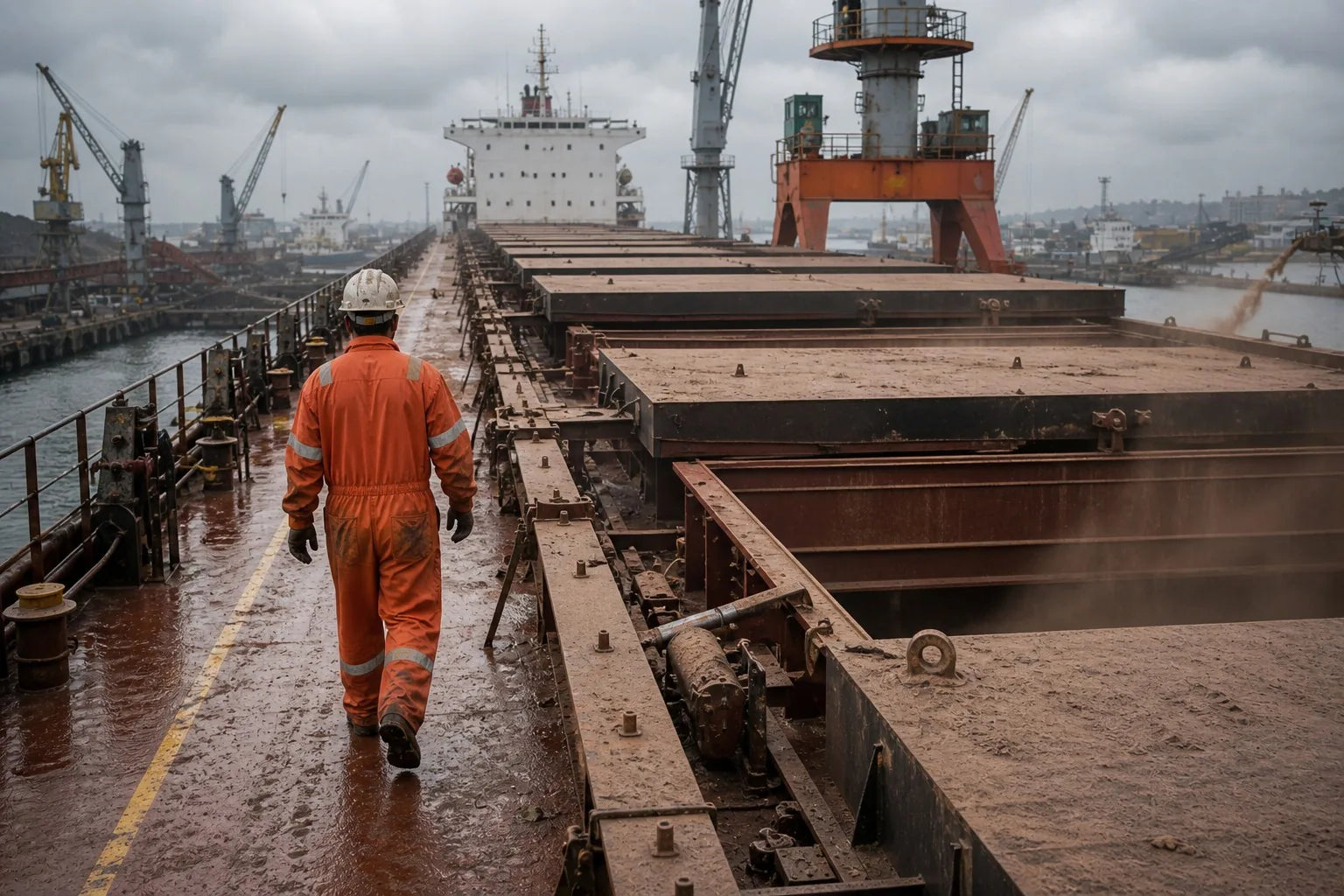
For the crew, that means life shaped by cargo holds, hatch covers, ballast, dust, drafts, inspections, cleaning jobs, engine-room routines, and port days that can stretch long past the schedule on paper.
What the work feels like
On deck, bulk carrier work is physical and repetitive in the way real ship work often is. Hatch covers need attention. Holds need inspection. Cargo residues need cleaning. Mooring lines, gangway watches, deck maintenance, and cargo operations all compete for time.
Hold cleaning is the job nobody writes home about. After a coal cargo, before a grain cargo, the holds have to pass a surveyor's inspection. That means scraping, washing, drying, and doing it again if the inspector says so. The ship does not load until the holds pass.
In the engine room, the ship still needs power, pumps, generators, steering, fuel systems, air compressors, and maintenance. A quiet sea day for cargo can still be a full day below deck.
The rhythm of the ship
Bulk carrier crews often work with small teams. Twenty people on a ship the length of two football pitches. The mess room matters because it may be the only social space after a hot deck job or long watch. The cabin matters because privacy is limited. The galley matters because food becomes routine, comfort, and morale.
Passages are long. Forty days between ports is not unusual on some trades. That shapes everything: what you pack, how you handle the isolation, how much the connection home matters when it works and how much it costs when it does not.
Port calls are not vacations. They can mean loading surveys, draft checks, terminal instructions, paperwork, stores, inspections, and the hope that shore leave is still possible before sailing.
What bulk carriers give you back
Compared to a container ship on a liner schedule, a bulk carrier moves slower and stays longer. Terminals are often further from the city, but the stay can run days rather than hours. Crew who want any chance of walking on land tend to prefer that trade.
The work is heavier. The pace is not.
Why this vessel type has identity
Bulk carrier crew understand a particular kind of work: less visible than cruise ships, less polished than container terminals, but central to the movement of raw materials. The ship may not look glamorous. The work is real.
That is why vessel-specific identity matters to 7SHORT1LONG®. A bulk carrier design should speak to the people who know the sound of cargo operations and the feeling of dust after a long day on deck.
FAQ
What does a bulk carrier carry?
Unpackaged cargo such as grain, ore, coal, cement, and fertilizer.
How big is a bulk carrier crew?
Typically around 20 to 25 people, depending on vessel size and flag state manning requirements. Smaller than a container ship of comparable tonnage, and far smaller than any cruise ship.
Is life on a bulk carrier hard?
It can be physically demanding. Crew deal with cargo holds, dust, cleaning, watches, maintenance, small teams, and long periods between ports. The isolation is the part most people underestimate.
Do bulk carrier crews get more shore leave?
Often, yes. Port stays tend to be longer than on container ships. But shore leave still depends on the terminal, the port state, the security level, and company policy.
YES, WE ARE CREW.
Gear for the watchShip Type T-Shirts · Ship Department