Written for seafarers Reviewed for accuracy by crew who have stood the watch.
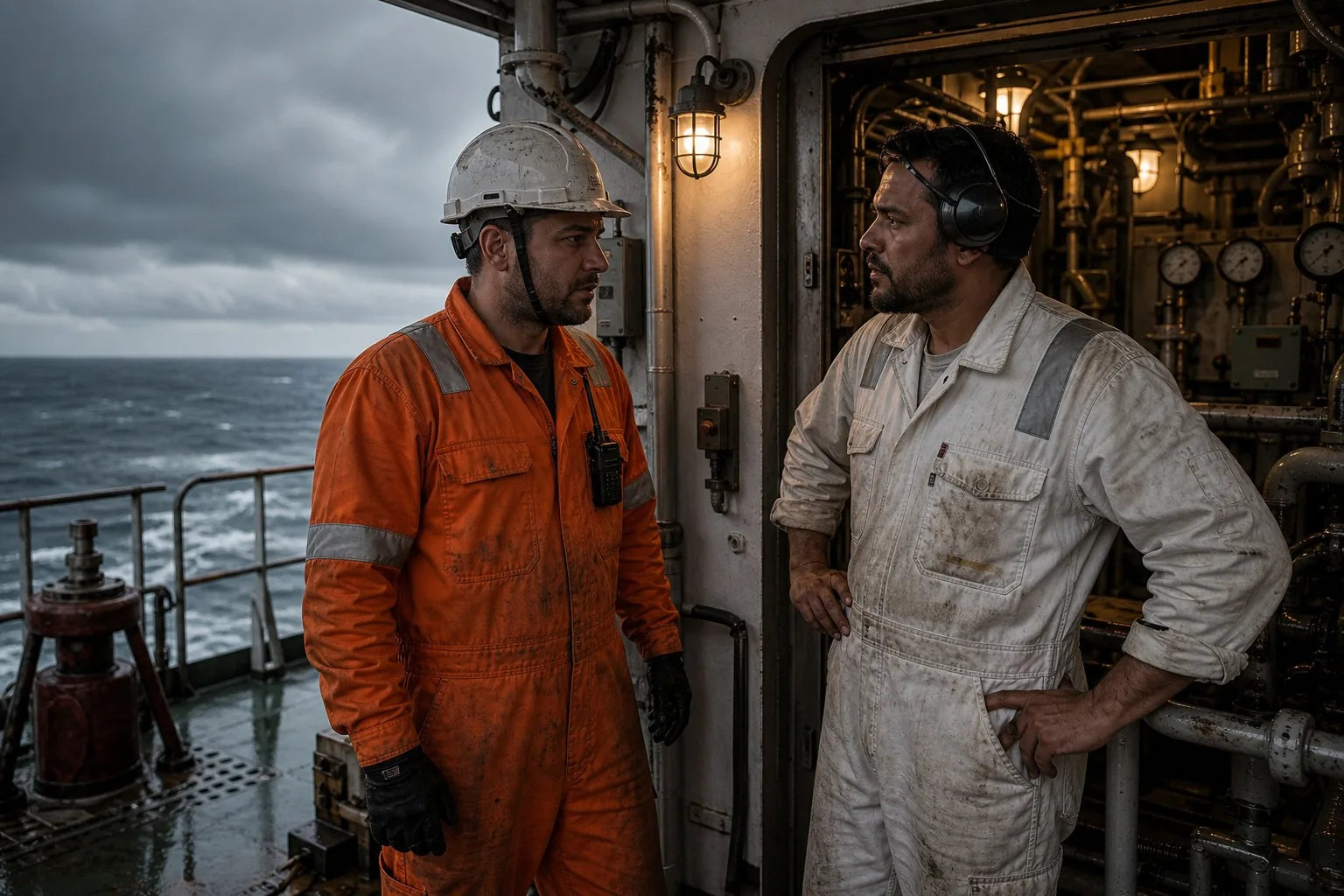
Walk onto a merchant vessel and one of the first divisions is simple: Deck or Engine. It is printed into the routine of the ship. Bridge watches, engine rounds, cargo work, mooring stations, maintenance plans, drills, handovers, and department pride.
The division is not about ego. It is about responsibility. Deck and Engine solve different problems inside the same hull.
The deck department
The deck department handles navigation, cargo operations, mooring, deck maintenance, safety equipment, bridge watches, gangway routines, and the movement of the ship through ports and open water.
The master carries overall authority. The chief officer usually manages cargo, stability, and deck operations. Watchkeeping officers handle navigation and bridge duties. Ratings, led by the bosun on most ships, carry the physical deck work: lines, painting, maintenance, lookout, cargo support, and preparation for port.
If you are an AB or an ordinary seaman, this is where your working day happens. Rust never sleeps and neither does the paint locker.
The engine department
The engine department keeps propulsion, power, pumps, generators, steering gear, auxiliary systems, refrigeration, fuel systems, and technical maintenance alive.
The chief engineer leads the technical side. Other engineers, ETOs, fitters, motormen, oilers, and wipers carry the work through engine-room watches, planned maintenance, repairs, rounds, and troubleshooting under pressure.
The engine room runs hot, loud, and vertical. Nobody walks through it by accident.
Why the cultures feel different
Deck is visible: bridge windows, cargo decks, pilot ladders, mooring stations, and gangways. Engine is often hidden: heat, alarms, machinery spaces, control rooms, tools, vibration, and maintenance jobs that passengers and shore visitors never see.
That difference creates jokes, rivalry, and real pride. The ship only works when the bridge and the engine room trust each other. How the argument actually sounds over mess room coffee is its own story: Deck vs Engine Rivalry: The Mess Room Argument Every Ship Knows.
Cruise ships add a third world
On cruise ships, hotel and catering form a large third department: cabins, restaurants, bars, entertainment, laundry, guest services, cleaning, and medical support. They work under the same vessel reality, but their daily pressure is different, and they are usually the largest group on board by headcount.
That matters for 7SHORT1LONG® because crew identity is not one flat thing. Department, rank, vessel type, and contract life all shape how crew see themselves.
FAQ
What is the difference between deck and engine?
Deck handles navigation, cargo, mooring, and vessel movement. Engine handles propulsion, power, machinery, and technical systems.
Who is more senior, the captain or the chief engineer?
The master has overall command of the vessel. The chief engineer leads the technical department and carries major responsibility for the ship's machinery. They are department heads of equal standing, but the master's authority over the vessel is absolute.
What ranks are in the deck department?
Master, chief officer, second officer, third officer, deck cadet, bosun, able seaman (AB), and ordinary seaman (OS).
What ranks are in the engine department?
Chief engineer, second engineer, third engineer, fourth engineer, electro-technical officer (ETO), fitter, motorman, oiler, and wiper.
Why does 7SHORT1LONG make department-based content?
Because department identity is real crew identity. A bosun, an engineer, a steward, a cadet, and a cook do not experience the same ship in the same way.
YES, WE ARE CREW.
Gear for the watchShip Type T-Shirts · Ship Department