Written for seafarers Reviewed for accuracy by crew who have stood the watch.
The International Maritime Organization, or IMO, is the United Nations agency behind many of the international rules that shape shipboard life. Crew may not talk about the IMO every watch, but they live with its work through drills, certificates, bridge procedures, engine-room safety, pollution controls, and training standards.
For a seafarer, the IMO is not a distant office in London. It is the system behind SOLAS, MARPOL, STCW, ISPS, voyage planning, emergency readiness, and the paperwork checked when a vessel enters port.
What the IMO does
The IMO develops global standards for international shipping. Those standards let ships from different flags, companies, and ports work under a common safety and environmental framework.
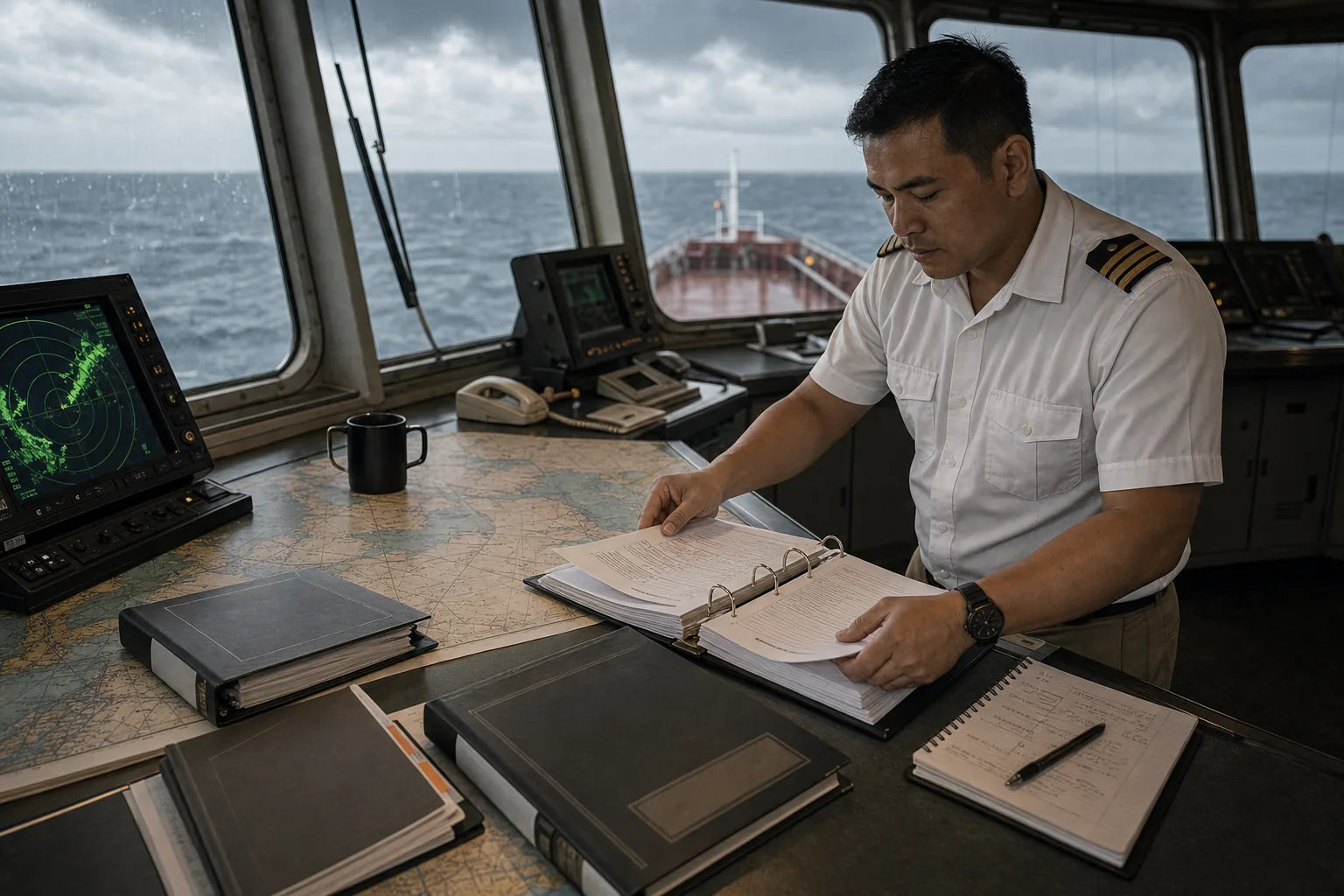
On board, that framework becomes practical: bridge watchkeeping, fire drills, lifeboat equipment, oil record books, garbage management, security levels, crew certification, and the way a ship prepares for inspection.
Why crew should care
You do not need to memorize every IMO instrument to understand why it matters. A deck officer using ECDIS, an engineer maintaining pollution-prevention equipment, a rating standing gangway watch, or a cadet preparing for STCW training all meet IMO-linked rules in daily work.
Good regulation does not remove seamanship. It gives the ship a baseline, so the crew can work with clearer expectations across ports, flags, and companies.
The main IMO-linked names crew hear
SOLAS is safety of life at sea: construction, life-saving appliances, fire protection, navigation safety, and emergency readiness.
MARPOL is pollution prevention. Crew meet it through oil, garbage, sewage, air-emission, and cargo-related procedures.
STCW is standards of training, certification, and watchkeeping. It is tied directly to professional competence and safety duties, and it is the reason your certificates have expiry dates.
ISPS is ship and port facility security. It matters at the gangway, in restricted areas, and during port calls under different security levels.
MLC 2006 is the Maritime Labour Convention. It sits with the International Labour Organization rather than the IMO, but crew meet it in the same place: contracts, wages, rest hours, repatriation, and living conditions on board.
What the IMO does not do
The IMO does not inspect your ship. It does not issue your certificates. It does not pay your wages or enforce your contract.
Enforcement runs through flag states, port state control, class societies, and the company. When a Port State Control officer walks up the gangway in Rotterdam, that is the IMO framework arriving in person, held by someone else's hand.
The 7SHORT1LONG connection
7SHORT1LONG® is named after a shipboard emergency signal: seven short blasts, one long. That signal has meaning only because professional crews work inside a safety culture of muster lists, drills, alarms, roles, and responsibility.
7S1L is a Seafarer Identity Brand. Official rules come from the vessel, the company, the flag state, the port state, and the maritime authorities.
Source note
For official convention context, start with the International Maritime Organization pages on SOLAS and STCW.
FAQ
What does IMO stand for?
IMO stands for International Maritime Organization. It is a specialized agency of the United Nations.
Does the IMO inspect ships directly?
No. The IMO develops international standards. Enforcement is handled by flag states, port states, companies, class societies, and maritime authorities.
Is the MLC an IMO convention?
No. The Maritime Labour Convention 2006 comes from the International Labour Organization, not the IMO. It covers contracts, wages, rest hours, and living conditions.
Why does the IMO matter to crew?
Its instruments shape the safety, training, pollution-prevention, and security systems that crew work with on board every day.
YES, WE ARE CREW.
Gear for the watchSafety at Sea Collection · Seafarer T-Shirts