Written for seafarers Reviewed for accuracy by crew who have stood the watch.
Safety at sea is the discipline that keeps a ship predictable when conditions are not. It lives in watch handovers, toolbox talks, enclosed-space permits, mooring stations, engine-room rounds, fire doors, muster lists, and the way crew react when an alarm sounds.
For professional seafarers, safety is not a poster on a bulkhead. It is the difference between routine work and a bad day becoming worse.
What safety at sea includes
Safety at sea includes training, procedures, equipment, communication, maintenance, leadership, and crew attention. A lifeboat is only one part of it. The human part matters just as much.
A deck rating checking a line, an engineer logging machinery readings, a cruise crew member guiding guests during a drill, or a cadet asking the right question during a briefing all contribute to the safety system.
Where safety becomes real
It becomes real at the gangway when access is controlled. It becomes real on the bridge when visibility drops. It becomes real in the engine room when a leak is noticed early. It becomes real during a fire drill when people move to the correct station without confusion.
Good safety culture is not loud. It is consistent. It shows up before the emergency.
Common safety areas on board
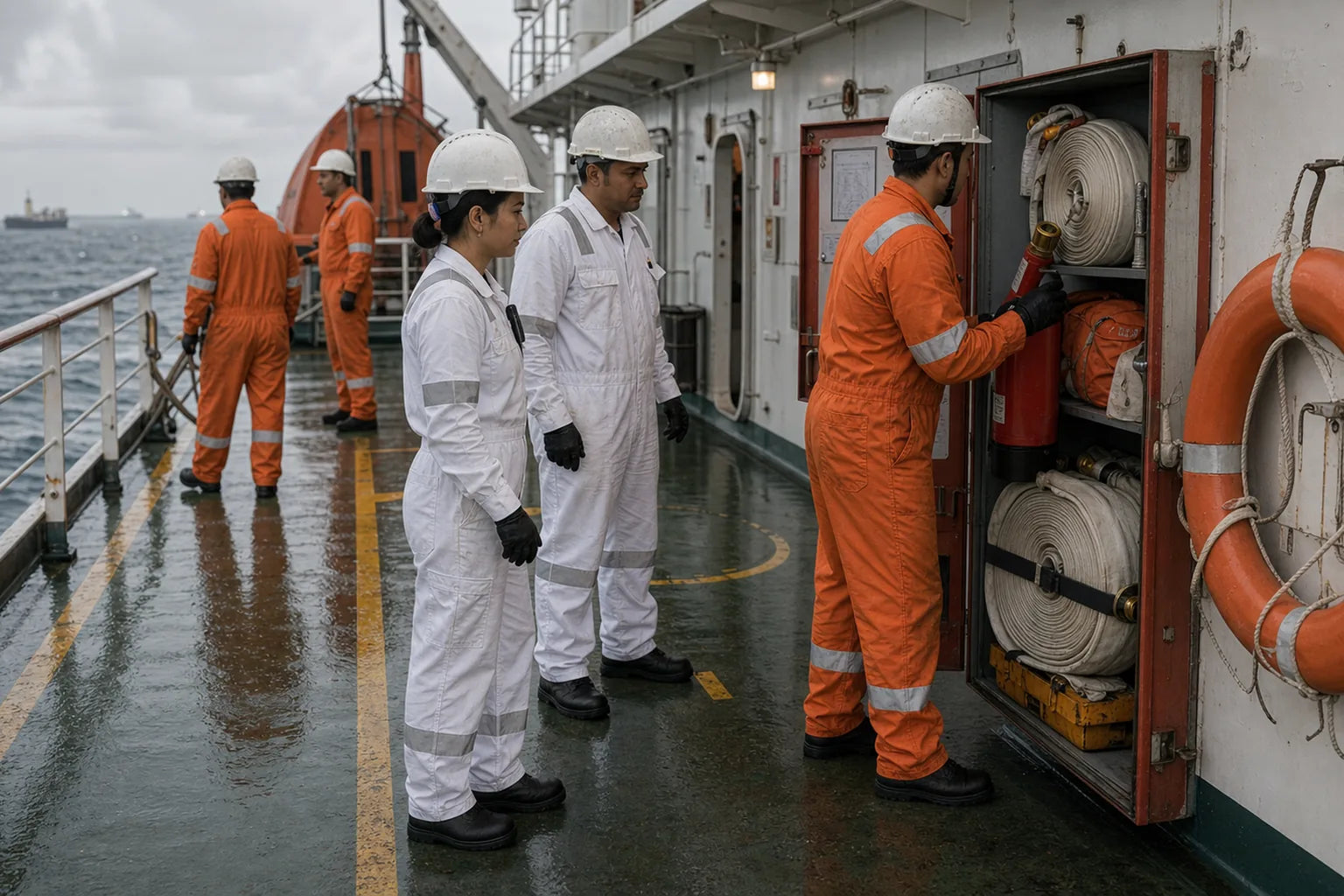
Shipboard safety usually touches navigation, fire prevention, life-saving appliances, communication systems, enclosed spaces, mooring operations, working aloft, hot work, cargo handling, pollution prevention, and fatigue management.
Each area has procedures because the ship is a working environment. Steel, weather, machinery, cargo, confined spaces, and time pressure do not forgive vague attention.
The signal behind the name
Seven short blasts and one long: the General Emergency Alarm under SOLAS. Stop, muster, wait for orders. It is not the order to abandon ship, and a crew member who confuses the two moves in the wrong direction under pressure. What the alarm sounds like, and what happens on board after it, is covered on the cruise ship emergency alarm page, including an original recording from a crew drill.
How this connects to 7SHORT1LONG
7SHORT1LONG® takes its name from that signal. It is a reminder that crew safety depends on people knowing what to do before the alarm sounds, not after.
7S1L is a Seafarer Identity Brand. Official procedures always come from the vessel, the company, the flag state, and the maritime authorities.
Source note
For official safety convention context, see the International Maritime Organization overview of SOLAS.
FAQ
What is safety at sea?
Safety at sea is the system of training, equipment, procedures, maintenance, and crew behavior used to prevent incidents and respond to emergencies on ships.
What does 7 short blasts and 1 long blast mean?
It is the General Emergency Alarm under SOLAS. It means go to your muster station and wait for orders. It is not the order to abandon ship.
Who is responsible for safety on board?
Everyone has a role. The master carries overall responsibility, but officers, engineers, ratings, hotel crew, cadets, and contractors all affect safety through their actions.
YES, WE ARE CREW.
Gear for the watchSafety at Sea Collection · Seafarer T-Shirts