Written for seafarers Reviewed for accuracy by crew who have stood the watch.
Mental health at sea is not weakness. It is part of the working reality of long contracts, broken sleep, missed family moments, heavy weather, shared cabins, port pressure, and the responsibility of keeping a ship moving.
This article is not medical advice. If a crew member is in immediate danger, talking about self-harm, unable to function safely, or facing a crisis on board, use the vessel's emergency chain, contact the master or designated officer, and seek professional medical support immediately.
Why seafarer mental health needs plain language
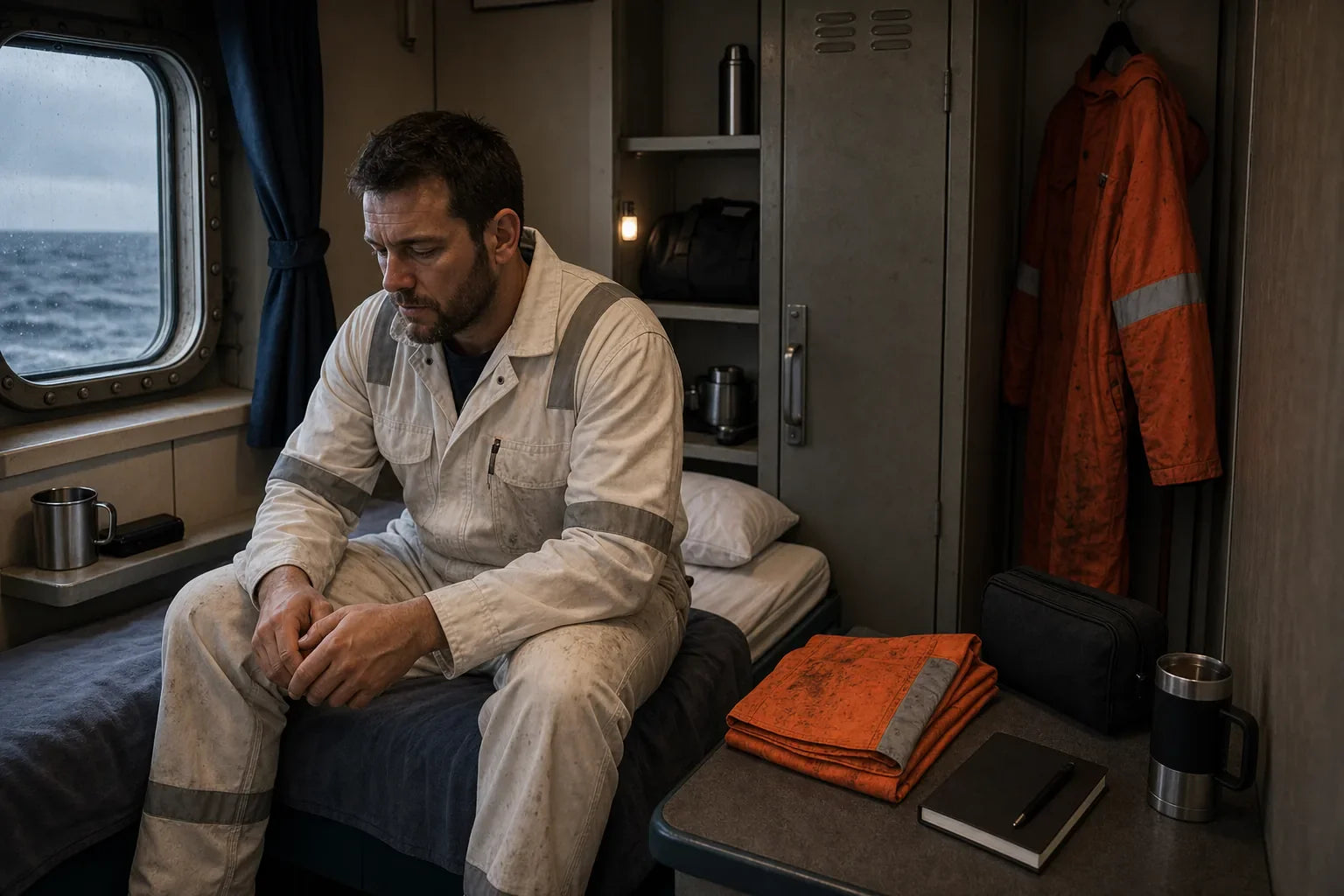
A seafarer can be surrounded by people and still feel alone. The mess room can be full, the engine room can be loud, the bridge can be busy, and the cabin can still feel very far from home.
Long contracts, watch schedules, fatigue, cultural distance, limited shore leave, poor connectivity, and pressure from home build quietly. Crew learn to keep working because the ship needs them. That does not mean the pressure is small.
What stress can look like on board
Poor sleep. Anger. Withdrawal. Mistakes during routine tasks. Loss of appetite. Low mood. Constant worry. Feeling numb.
It can also show up as silence. The person stops joining mess room conversation. Stops calling home. Stops caring about small routines.
On a ship, those changes matter. A tired deck officer, a distracted engineer, an isolated cadet, an overloaded steward, or an exhausted rating becomes less safe long before anyone asks for help.
What crew can do early
Small action matters before a crisis. Tell one trusted person on board. Speak with the master, chief officer, chief engineer, HR contact, medical officer, chaplain, welfare visitor, or another crew member you trust.
Save the helpline contact before you need it. When the connection drops mid-contract, you cannot look it up.
For shore support, organizations such as SeafarerHelp by ISWAN, The Mission to Seafarers, Stella Maris, Deutsche Seemannsmission, and local seafarer centers are starting points in most ports.
What good crew culture does
Good crew culture does not mock fatigue, loneliness, or fear. It notices when someone changes. It checks on the cadet after a bad watch. It lets the galley crew be human. It gives the engine team room to speak after a hard job. It does not turn every problem into a joke.
7SHORT1LONG® is built around crew identity. That identity has to include the hard parts: long contracts, pressure, silence, and the need for support without shame.
What this brand can and cannot do
A shirt cannot replace a chaplain, doctor, counselor, union rep, welfare worker, company contact, or trusted officer. A brand cannot fix mental health at sea.
What 7S1L can do is use its voice responsibly: speak about crew pressure without drama, point toward real support, and refuse to turn seafarer struggle into motivational marketing.
FAQ
Is it normal for seafarers to struggle mentally?
Yes. Long contracts, fatigue, isolation, and distance from home affect mental health. The important thing is to seek support early and not hide serious distress.
Where can seafarers look for support?
Start with the vessel's chain of command, medical contact, company support, welfare visitors, seafarer centers, chaplains, or services such as SeafarerHelp.
What should I do in an emergency?
If someone may harm themselves or others, treat it as an emergency. Contact the master, designated officer, medical support, or local emergency services through the ship's procedures immediately.
YES, WE ARE CREW.
Gear for the watchCrew Welfare at 7S1L · Seafarer Hoodies