Written for seafarers Reviewed for accuracy by crew who have stood the watch.
SOLAS is not abstract to seafarers. It is the drill schedule, the muster list, the lifeboat station, the fire door, the emergency lighting, the bridge equipment, the radio room, and the alarm that tells the whole ship to move.
This guide stays on the regulations side: the drills, the life-saving appliances, and the daily systems that turn an IMO treaty into shipboard routine. What SOLAS is and where the convention comes from is covered in What Is SOLAS.
Muster stations and drills
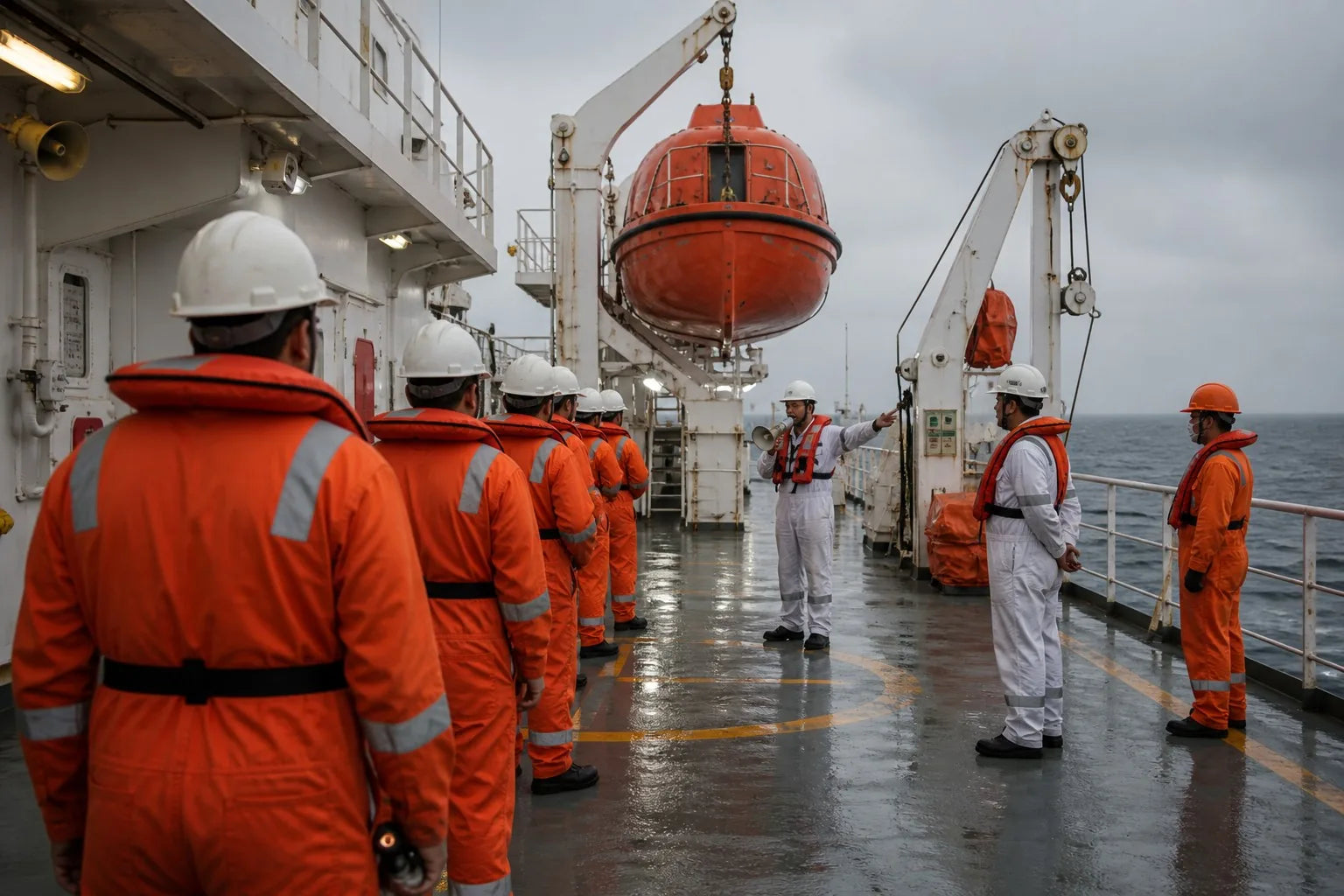
Muster drills build memory before the emergency. A crew member needs to know the route from cabin to station, the role on the muster list, the equipment involved, and the officer responsible for the station.
Fire drills, abandon ship drills, man-overboard preparation, and rescue boat routines are not theatre. They are practice for the moment when darkness, smoke, weather, passengers, fatigue, or panic can make simple actions difficult.
Life-saving appliances
SOLAS-linked safety culture includes lifejackets, lifeboats, life rafts, immersion suits, EPIRBs, rescue boats, launching arrangements, alarms, and communication systems. On board, these items are checked, logged, maintained, and drilled.
For deck officers and ratings, this means inspections, lowering routines, inventory, maintenance, and making sure equipment is ready before anyone needs it.
ISM and daily safety culture
The ISM Code turns safety into daily procedure: permits, risk assessments, near-miss reporting, maintenance systems, bunkering procedures, enclosed-space entry, hot work, cargo operations, and emergency response plans.
That paperwork can feel heavy. The purpose is clear. Make the ship predictable before conditions become dangerous.
The general emergency alarm
Seven or more short blasts followed by one long blast, sounded on the ship's whistle and the general alarm bells, is the general emergency alarm. Every crew member on a SOLAS vessel knows it.
It does not mean abandon ship. This is the single most common misunderstanding ashore, and crew never make it. The alarm means: stop what you are doing, take your lifejacket, go to your muster station, report, and wait for orders. Abandon ship is a separate order. It comes from the master, and it comes verbally.
The muster list on the bulkhead tells every person on board which station is theirs and what their role is when the alarm sounds. That is the whole point of the signal: people move without discussion.
An original recording of the signal, and the full meaning behind it, is on the cruise ship emergency alarm page.
That signal is the root of 7SHORT1LONG®. It is not decoration. It is professional crew language.
Why 7SHORT1LONG treats SOLAS carefully
7S1L honors safety culture as crew identity. We do not replace training. We do not issue procedures. We do not sell fake authority.
We use the signal to recognize the people who know what it means: seafarers, cruise crew, cargo crew, offshore workers, deck officers, engineers, ratings, cadets, and port workers.
Source note
For official convention context, see the International Maritime Organization page on SOLAS, the Safety of Life at Sea Convention.
FAQ
Which safety areas do SOLAS regulations cover?
Construction standards, fire protection, life-saving appliances, radio communications, navigation safety, cargo rules, and management systems such as the ISM Code. Crew meet them as drills, inspections, and maintenance routines.
What does 7 short blasts and 1 long blast mean?
It is the general emergency alarm. It tells everyone on board to go to their muster station and wait for orders. It does not mean abandon ship. Abandon ship is a separate order given by the master.
Why is SOLAS important to 7SHORT1LONG?
The brand name comes from the general emergency alarm. It represents awareness, muster, discipline, and crew identity.
YES, WE ARE CREW.
Gear for the watchSafety at Sea Collection · Seafarer T-Shirts