Written for seafarers Reviewed for accuracy by crew who have stood the watch.
Working at sea is not the same as liking the ocean. It is a job inside a shipboard system: watches, departments, drills, contracts, cabins, paperwork, inspections, port calls, weather, and the people who keep the vessel moving.
Life at sea can be meaningful. It is not soft. Anyone joining a ship should understand the work before romanticizing the horizon.
Common jobs at sea
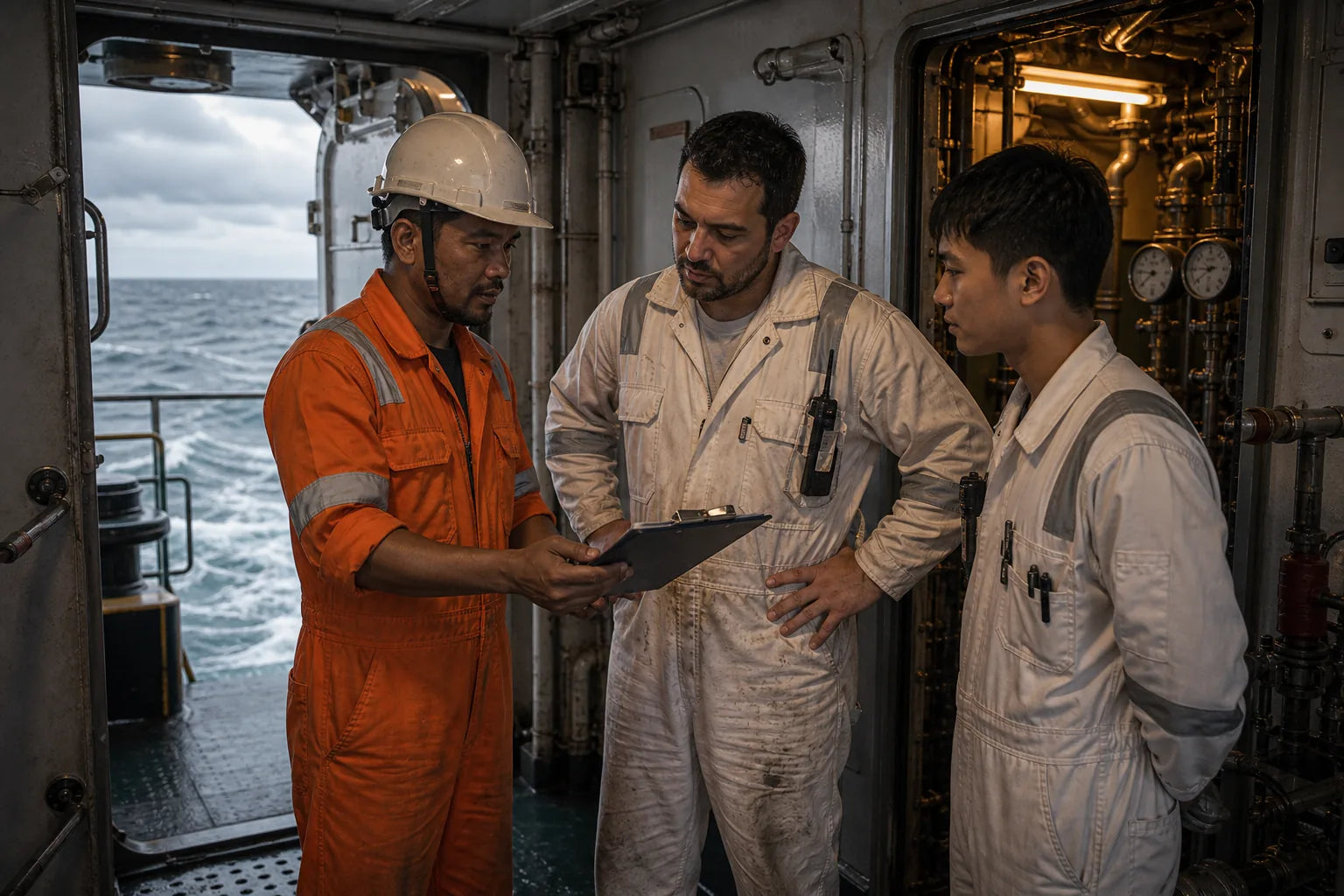
Deck crew handle navigation support, mooring, cargo work, safety equipment, deck maintenance, and gangway routines. That is the AB, the ordinary seaman, the bosun, the deck cadet.
Engine crew maintain propulsion, power, pumps, generators, and machinery spaces. That is the oiler, the motorman, the fitter, the wiper, the ETO.
Cruise hotel crew handle cabins, restaurants, bars, guest services, cleaning, and passenger-facing operations. On a large cruise ship they outnumber deck and engine combined.
Other maritime jobs include galley crew, electricians, medical staff, offshore workers, security teams, cadets, port workers, pilots, and surveyors.
What daily life looks like
The ship works in time blocks: watches, meals, rounds, drills, maintenance, cargo operations, inspections, rest hours.
A crew member wakes for the 04:00 to 08:00 watch, works a port call, cleans a cabin section, troubleshoots equipment, or stands by during mooring before most people ashore have started their day. The coffee in the mess room is not ready at 03:40.
Living space is limited. Privacy is limited. The mess room, the gym, the smoking area, the laundry, and the cabin routine become part of mental survival.
What makes it hard
Long contracts, fatigue, rough weather, homesickness, cultural distance, limited shore leave, poor internet, and pressure from home all affect crew. The work is physically dangerous if procedures are ignored.
That is why good crew culture matters. People watch out for each other because nobody can disappear into private life after work.
Before you sign anything
The job also comes with a contract, and the contract is where the real differences live. Wage, contract length, overtime, repatriation, and who pays for what. Read it. If a manning agent asks you to pay a fee for the job, that is not normal and it is not lawful under the Maritime Labour Convention. What agencies can charge you, and what they cannot, is broken down in Manning Agency Fees.
Why people still choose it
For the right person, working at sea builds skill, independence, discipline, and a kind of identity that is difficult to explain ashore. You become part of a moving crew, tied to ports, watches, departments, and the vessel itself.
How that time changes a person, watch by watch, is its own story: How Life at Sea Shapes Identity, Discipline, and Personal Growth.
That is the reality 7SHORT1LONG® speaks to. Not a vacation. Not fashion. Crew life.
FAQ
What jobs can you do at sea?
Deck officer, engineer, AB, ordinary seaman, oiler, bosun, fitter, cadet, cook, steward, cruise hotel crew, electrician, security staff, offshore worker, and port-related roles.
Is life at sea difficult?
Yes. Long contracts, fatigue, limited privacy, rough weather, and time away from family. It also builds a strong professional identity.
Do I have to pay to get a job at sea?
No. Under the Maritime Labour Convention 2006, seafarers should not be charged fees for finding employment. If a manning agency asks you to pay for the job, that is a warning sign.
YES, WE ARE CREW.
Gear for the watchSeafarer T-Shirts · Crew Best Sellers