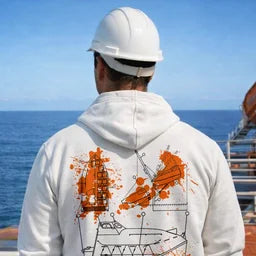
Martin Lex is the pen name of the 7S1L safety desk: SOLAS, lifesaving and firefighting gear, muster drills, emergency signals and safe work on board. Portrait is illustrative.
Search "seafarer style" online and you get rope bracelets, striped linen shirts, anchor cushions, and mood boards about coastal calm. None of it was put together by someone who has carried a kit bag up a gangway at 06:00. The people who live at sea dress by a different logic. Seafarer style is utility shaped by work: watches, cabins, weather, port gates, engine-room heat, deck spray, laundry schedules, and the need to pack light at crew change.
Stand at any container terminal on crew change day and watch the joiners come through the gate. Hoodies. Trainers. One checked bag and a backpack, documents in a plastic sleeve. Nobody is dressed for the ocean. Everybody is dressed for a flight, an agent's van, a wet gangway, and a cabin they have not seen yet.
A seafarer does not need coastal décor language or yacht-club fashion. Crew need gear that survives the job and symbols that recognize the working sea. The rest of this essay stays in the places where clothing actually lives on a ship: the alleyway door, the laundry room, the kit bag, the mess room, the port gate.
Function comes first
On board, every item has to earn space. A kit bag is not infinite. A neck gaiter, hoodie, cap, shirt, towel, or phone case is useful only if it fits the routine: bridge watch, travel, gym, cabin, mess room, port bus, or a cold morning alongside.
Style follows function. If a design cannot survive a nine-month contract, salt air, ship laundry, and the judgment of the mess room, it is not crew style.
Why crew live in hoodies
A working ship runs two climates at once. The deck in Jebel Ali or Santos can sit above 35 degrees Celsius in the afternoon. Ten meters away, behind one steel door, the accommodation air conditioning holds the alleyways at office temperature. An AB comes in from cargo watch soaked in sweat and walks straight into refrigerated air. The hoodie is the answer to that door.
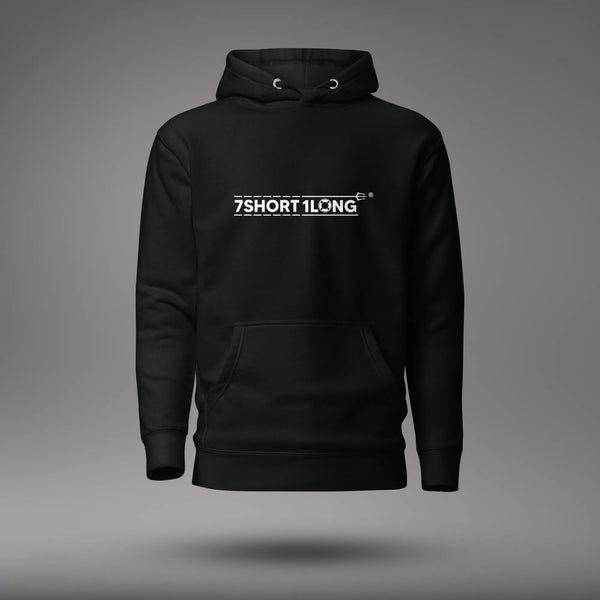
Night watches do the rest. Bridge lights go down after sunset, the coffee machine works overtime, and even in the tropics the 0000 to 0400 watch feels cold by four in the morning. The engine control room is chilled for the electronics while the engine room behind the glass runs hot. Fatigue makes everyone feel colder than the thermometer says. This is why a seafarer hoodie is not a fashion item on board. It is climate control you own.
What the ship does to your clothes
Ship laundry is honest and brutal. Crew laundry rooms run industrial machines, hot water, and mixed loads on somebody else's schedule. Cotton shrinks. Blacks turn grey. Cheap prints crack after a dozen washes. Most seafarers have lost a favorite shirt to a hot dryer somewhere between two port calls, and learned the same rule from it: nothing precious comes on board.
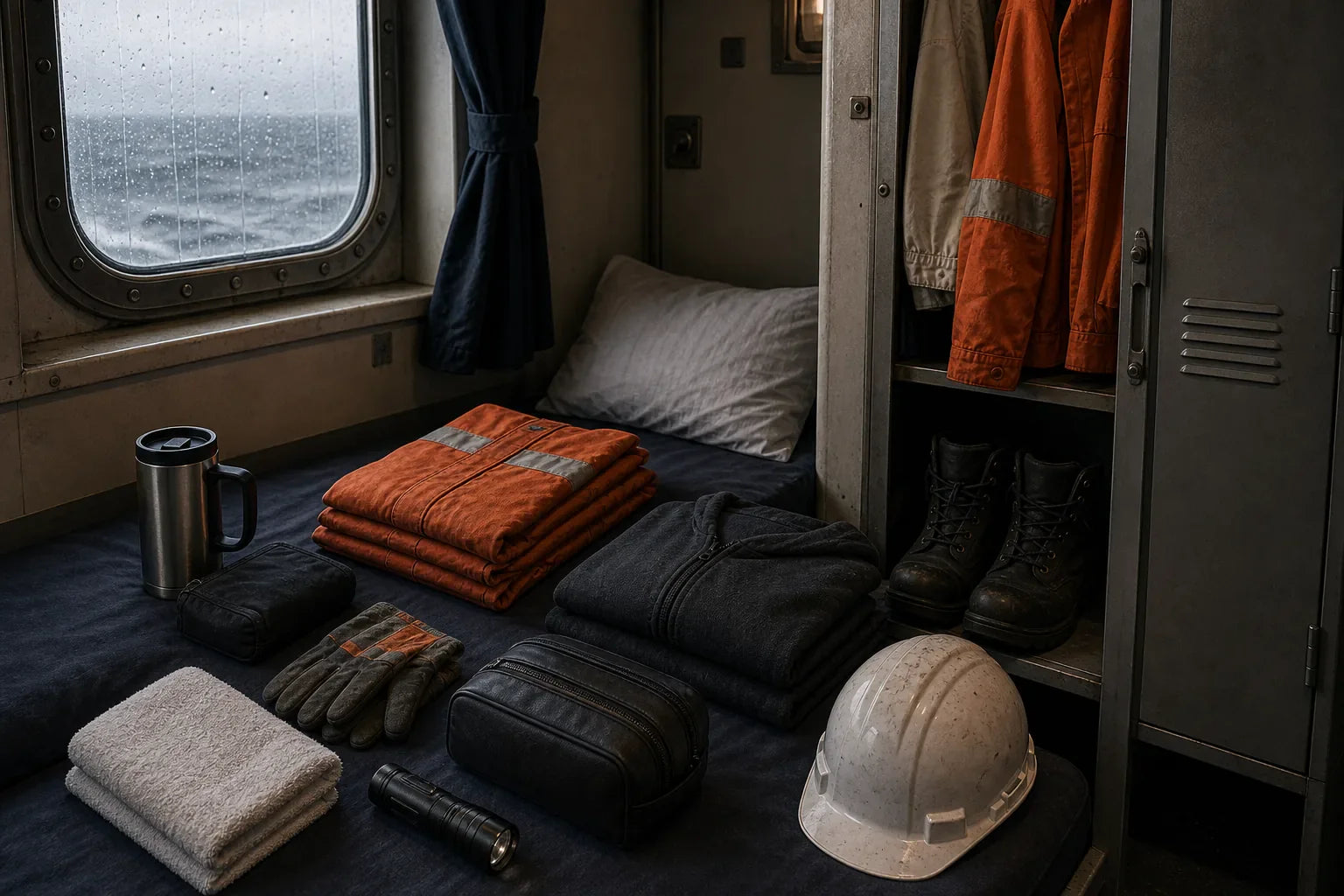
The boilersuit draws the sharpest line in the wardrobe. Coveralls, safety boots, and gloves belong to the job. What you wear after the shower belongs to you. That off-duty layer is small, a handful of shirts and one or two hoodies, and it carries all the identity, because the working layer is issued and identical. MLC 2006 regulates accommodation, food, and catering on board. It does not protect a favorite print from a boiling wash cycle. Buy accordingly.
The sign-on bag decides
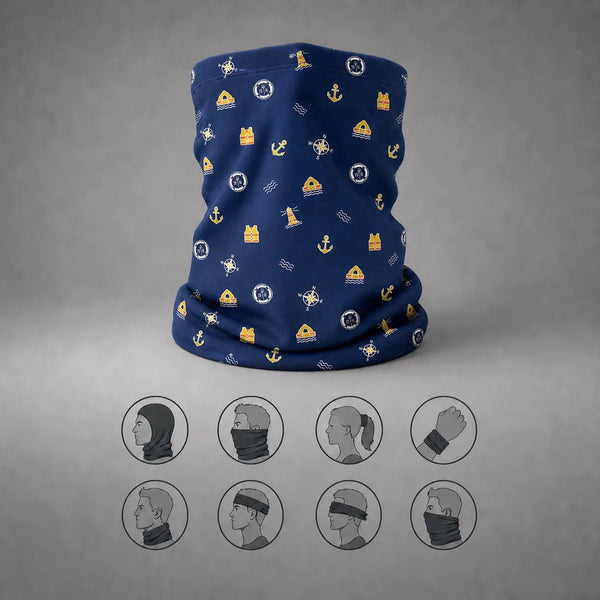
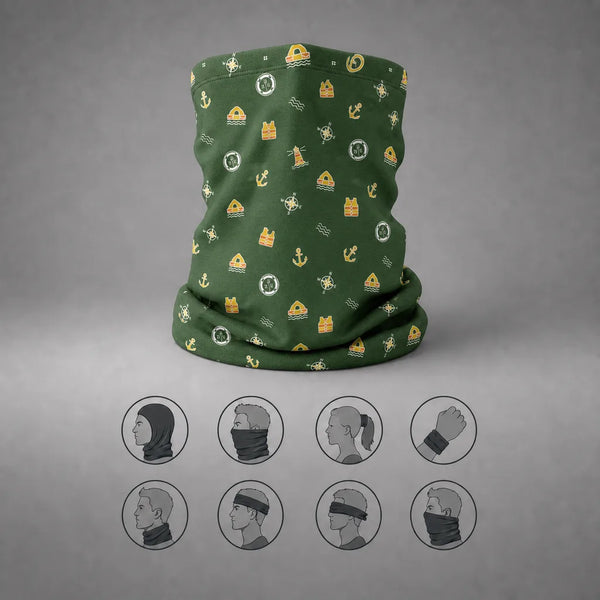
Every contract starts with the same negotiation between you and one checked bag. Months of living have to fit next to documents, medicine, chargers, and whatever the family sent along. Single-purpose items lose that negotiation. A gaiter that works as sun cover on deck, dust filter near a cargo hold, and neck warmth on a cold bridge wing earns its place. The deck work neck gaiter exists for exactly that math, and so does anything that layers instead of bulks.
Experienced crew pack in categories: a work layer for under the coveralls, a cabin and mess room layer, one warm layer, one shore outfit. The sign-on set approach comes straight from that habit. And before the bag is even packed, the contract deserves the same discipline. Run it through the free MLC Contract Check before you sign: clause by clause against MLC 2006, about a minute in the browser, no account, and the data stays on your device.
 Free crew appSeafarer Contract CheckCheck your contract clause by clause against MLC 2006 and flag state regulations. The check is free. On iPhone, Android or in the browser.
The mess room test
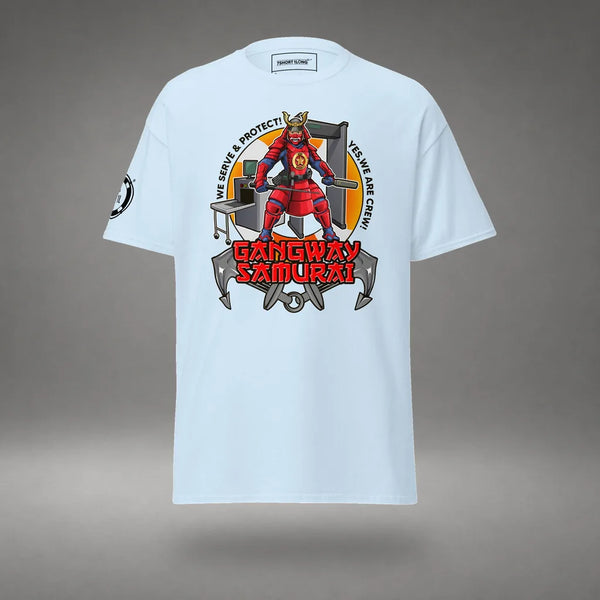
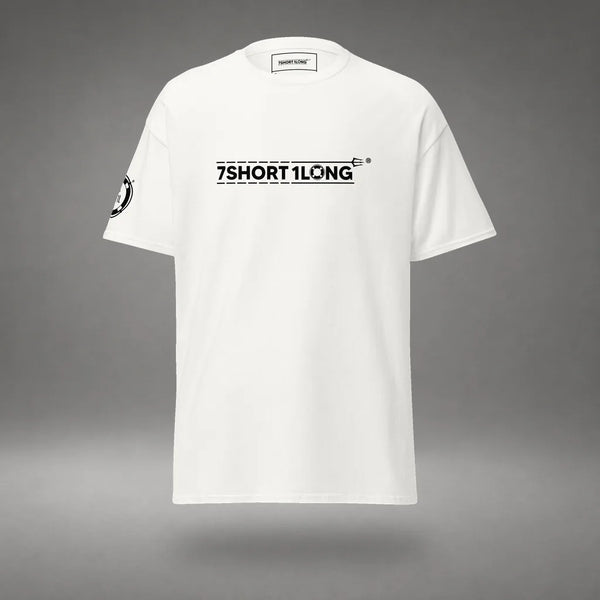
The mess room is where merch gets judged. A seafarer t-shirt with a real ship subject starts conversations, because half the table has done a contract on that ship type. A bulk carrier drawn with actual hatch covers gets a nod. A tanker design gets checked for accuracy by people who have stood terminal watch. The subject is the shared life, and everyone at the table can test it.
A yacht print fails the same test in seconds. Nobody at that table owns a yacht. The joke lands wrong, like a tourist shirt at a safety meeting. That is one reason the maritime trends 7SHORT1LONG® will not follow are listed in the open. Families run into the same wall every December, which is why the gift guide by ship department exists: "something with an anchor on it" has disappointed enough seafarers already.
Shore leave has its own dress code
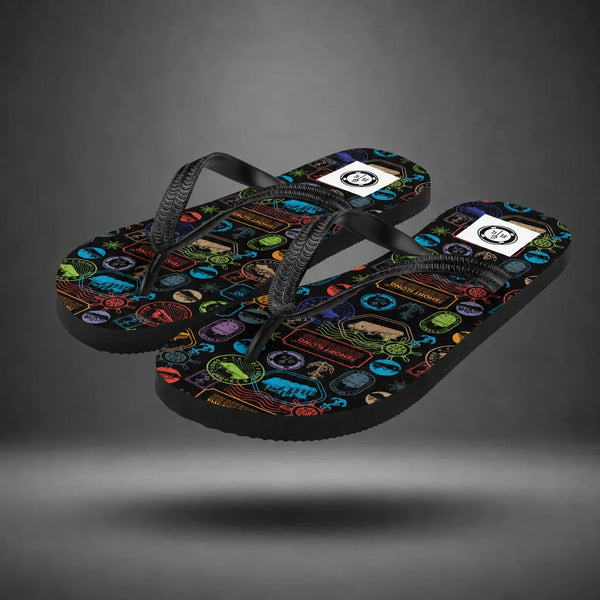
Shore leave is its own clothing category, and the clock rules it. Four hours in port, maybe six. The outfit has to go on fast after a shift, pass port gate security without fuss, handle the walk to the seafarer center or the mall, and take weather that was not in the forecast. Comfortable shoes beat good-looking ones. A hoodie covers the evening chill on the launch or the port bus back. In warm ports, flip flops come out the moment the gangway is behind you.
What shore leave is, and why it is worth defending, has its own guide: what is shore leave. The short version for clothing: dress so that not one minute ashore is wasted on going back for a jacket.
What to avoid
Luxury yachts. Beach living. Coastal décor. Tropical escape. Vague ocean inspiration. Those things sell to tourists. They do nothing for crew identity.
The stronger visual world is quieter. Washed navy. Charcoal. Storm grey. Off white. Steel. Rust. Rain. Terminal light. Workwear. International Orange only when the signal matters.
What 7SHORT1LONG means by style
For 7S1L, style is recognition. A deck officer, engineer, rating, cruise crew member, steward, cadet, bosun, or port worker should see the signal and know it was not written by someone pretending.
The product is a carrier. The crew identity is the point. The full argument sits in Seafarer Identity Is Not Maritime Fashion.
Source note
The MLC 2006 background in this article follows the International Labour Organization's overview of the Maritime Labour Convention, 2006, which counts accommodation, food, and catering among the regulated living conditions on board and treats shore leave as essential for seafarer health and welfare. Everything else here is shipboard routine described as crew live it, editorial context rather than legal advice.
FAQ
What is seafarer style?
Practical, low-profile gear shaped by life at sea: clothes that handle watch schedules, ship laundry, one-bag packing, and short shore leave, without yacht or vacation styling.
Why do seafarers wear hoodies on board?
Because a working ship runs hot and cold at once. Air-conditioned accommodation, chilled control rooms, and cold night watches sit right next to hot decks and engine spaces, so a hoodie becomes daily climate control.
What happens to clothes in ship laundry?
Industrial machines, hot water, and shared schedules shrink cotton, fade colors, and crack cheap prints. Most crew keep a small off-duty wardrobe and bring nothing precious on board.
What clothes should I pack for a ship contract?
Pack in categories: a work layer for under the coveralls, a small cabin and mess room layer, one warm layer, and a fast shore leave outfit. Multi-purpose items like a neck gaiter earn space in the bag, single-purpose items stay home.
What do seafarers wear on shore leave?
Whatever goes on fast and walks well: comfortable shoes, a hoodie or light jacket for the weather, plain clothes that pass port gate security without fuss. In warm ports, often flip flops.
Why does 7SHORT1LONG avoid yacht and vacation language?
Because the brand is built on crew identity. The center is working ships, not tourist fantasy.
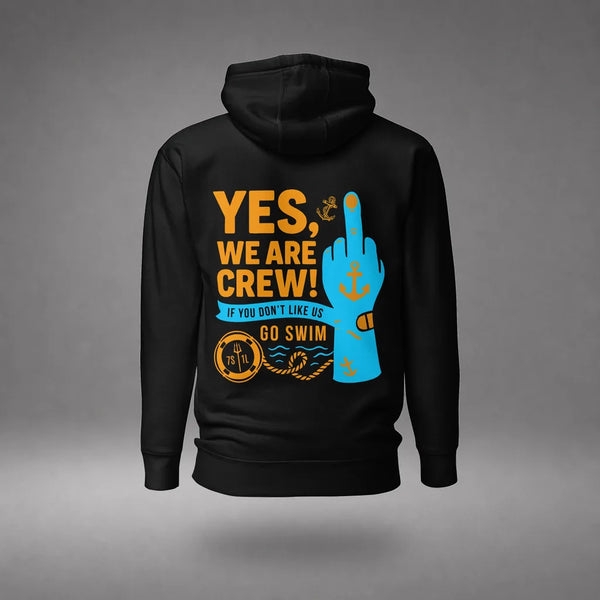
YES, WE ARE CREW.
Gear for the watchSeafarer T-Shirts · Crew Best SellersBuild your Sign On Set · Build your Sailor Set