Martin Lex is the pen name of the 7S1L safety desk: SOLAS, lifesaving and firefighting gear, muster drills, emergency signals and safe work on board. Portrait is illustrative.
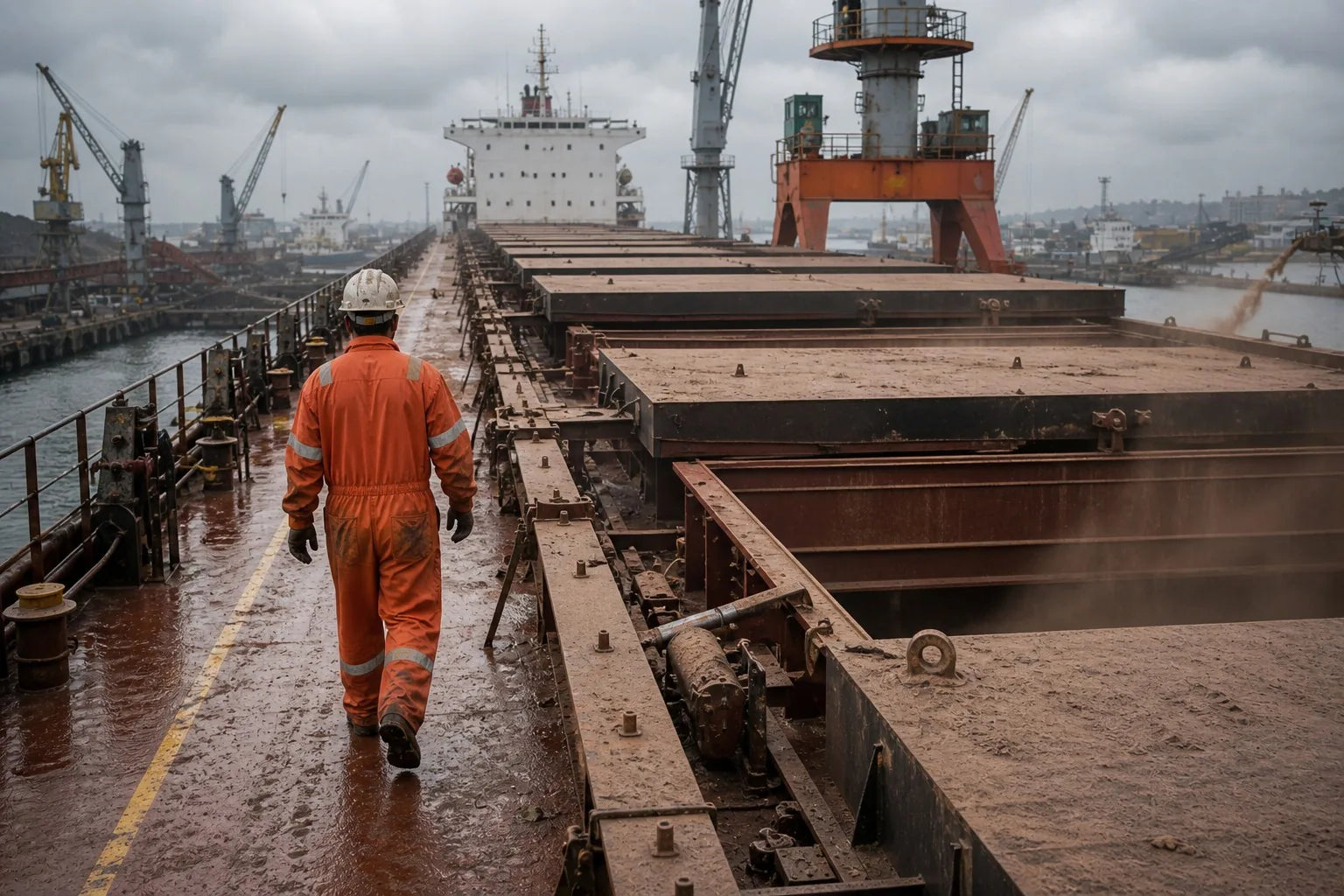
A bulk carrier is not built for attention. It is built to move raw cargo: grain, ore, coal, cement, fertilizer, or other loose materials that keep shore industries running. Life on a bulk carrier is shaped by that cargo from the day you walk up the gangway to the day you sign off.
For the crew, that means life built around cargo holds, hatch covers, ballast, dust, drafts, inspections, cleaning jobs, engine-room routines, and port days that can stretch long past the schedule on paper. If you are still deciding which trade fits you, our ship types guide for crew compares the main vessel types. This article is the unpolished version for one of them.
What the work feels like
On deck, bulk carrier work is physical and repetitive in the way real ship work often is. Hatch covers need attention. Holds need inspection. Cargo residues need cleaning. Mooring lines, gangway watches, deck maintenance, and cargo operations all compete for time, and the bosun's morning meeting decides who gets which of them.
In the engine room, the ship still needs power, pumps, generators, steering, fuel systems, air compressors, and maintenance. A quiet sea day for cargo can still be a full day below deck. The split between those two worlds is its own subject, and we wrote about it in deck vs engine.
Hold cleaning: coal out, grain in
Hold cleaning is the job nobody writes home about. It is also the job that decides whether the ship earns money on the next voyage.
Picture the changeover that every bulk crew knows. The ship discharges coal, and the next fixture is grain. Coal leaves black dust in every frame, every bracket, every bilge well. Grain has to go into a hold that a surveyor will certify as clean, dry, and free of residue and smell from whatever came before. So the bosun rigs the equipment, and the ABs and OS go down the hold ladders with scrapers, brooms, and high-pressure hoses. Sweep the tank top. Wash the bulkheads from the coaming down. Strip the bilges, dry everything, and then do it again if the chief officer finds a streak the surveyor would find first.
The surveyor's visit is the exam. He climbs down, runs a hand along a frame, checks the bilge wells, looks up into the hatch coaming. If the holds fail, the ship waits, the charterer complains, and the crew goes back down the ladders. The ship does not load until the holds pass. Between discharge port and load port, hold cleaning can swallow the entire sea passage.
Hatch covers and staying weathertight
The hatch covers on a bulk carrier are not background equipment. They are the lids on the cargo, and they take constant work: greasing wheels and cleats, renewing rubber packing, clearing drain channels, checking compression on the cross joints. On many ships the chief officer runs a hose test or an ultrasonic check after repairs, because the only proof that a hatch is weathertight is a test, not an assumption.
The reason is simple. Water in a grain cargo means damaged cargo and a claim. Water in a hold in heavy weather is worse than paperwork, because a flooded hold changes the ship's stability fast. Bulk carrier crews treat hatch maintenance as safety work, not cosmetics. An AB greasing cleats in the rain is doing hull integrity, even if it never looks like it.
Know your cargo: coal, grain, and ore
Solid bulk cargoes are not passive. The rulebook for them is the IMSBC Code (International Maritime Solid Bulk Cargoes Code), adopted by the IMO and mandatory since 1 January 2011 under SOLAS chapter VI. It sorts cargoes into Group A (may liquefy), Group B (chemical hazards), and Group C (neither). On board, that code is not theory. It is the reason for half the routines during a loaded passage.
Coal can self-heat and can emit methane. That is why coal is treated as both Group A and Group B unless testing shows otherwise, and why the crew monitors hold temperatures and gas readings through the sampling points during the voyage. No hot work near vents. Ventilation managed by the book, not by feel. A cadet learning to take gas measurements on a coal passage is learning real cargo care.
Grain is different. It falls outside the IMSBC Code and is carried under its own rulebook, the International Grain Code, because grain can shift when the ship rolls. The chief officer's stability calculation and the trimming of the cargo during loading are what keep a grain ship upright in a seaway.
Ore fines and similar Group A cargoes carry the hazard crews respect most: liquefaction. Loaded with too much moisture, above the transportable moisture limit, a solid cargo can start behaving like a liquid and shift. Liquefaction has capsized bulk carriers and killed crews, which is why masters can refuse cargo that looks too wet and why the IMSBC Code even includes a simple shipboard check, the can test, for a first indication. On a tanker the cargo dangers look completely different, and we covered that world in tanker ship life.
 Free crew appSeafarer Contract CheckCheck your contract clause by clause against MLC 2006 and flag state regulations. The check is free. On iPhone, Android or in the browser.
Anchor time and the draft survey
Bulk trades run on berth queues. Off major coal, grain, and ore ports, ships can wait at anchor for days, sometimes weeks, until the terminal calls them in. Anchor time is its own rhythm: anchor watches on the bridge, maintenance that finally gets done, drills, laundry, and someone fishing off the poop deck in the evening. It sounds calm. After the second week it mostly feels like waiting.
Then comes the ritual that opens and closes every cargo: the draft survey. The chief officer and an independent surveyor read the draft marks forward, midships, and aft on both sides, take ballast soundings, measure the dock water density, and sit down in the ship's office to calculate how much cargo is actually on board. That figure feeds the bill of lading. On a bulk carrier, nobody counts boxes. The ship's own marks are the scale.
The rhythm of the ship
Passages are long. Forty days between ports is not unusual on some trades. That shapes everything: what you pack, how you handle the isolation, how much the connection home matters when it works and how much it costs when it does not.
Port calls are not vacations. They can mean loading surveys, draft checks, terminal instructions, paperwork, stores, inspections, and the hope that shore leave is still possible before sailing.
A small crew, and what that means
Bulk carrier crews are small. Twenty people on a ship the length of two football pitches. You eat with the same faces for months, so the mess room matters because it may be the only social space after a hot deck job or long watch. The cabin matters because privacy is limited. The galley matters because one cook carries the morale of the whole ship. A birthday cake in the mess room on day 30 of a passage does more than any motivational poster ever will.
Small crew also means no anonymity. If the second engineer and the bosun do not get along, everyone knows by Tuesday. And when one crew member signs off in a far port, the whole social map of the ship changes. Contracts on bulk trades are long, so read yours before you fly out. The free MLC Contract Check compares a contract clause by clause against MLC 2006 in about a minute, in your browser, before you sign on.
What life on a bulk carrier gives you back
Compared to a container ship on a liner schedule, a bulk carrier moves slower and stays longer. Terminals are often further from the city, but the stay can run days rather than hours. Crew who want any chance of walking on land tend to prefer that trade.
The work is heavier. The pace is not. If you are weighing this trade against hotel-side seafaring, our comparison of cruise ship life vs cargo ship life lays out the honest differences.
Why this vessel type has identity
Bulk carrier crew understand a particular kind of work: less visible than cruise ships, less polished than container terminals, but central to the movement of raw materials. The ship may not look glamorous. The work is real.
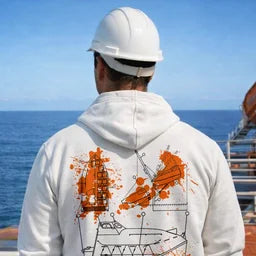
That is why vessel-specific identity matters to 7SHORT1LONG®. A bulk carrier design should speak to the people who know the sound of cargo operations and the feeling of dust after a long day on deck. That is the thinking behind the guardian angel bulk carrier t-shirt and the seafarer tattoo t-shirt with a bulk carrier design, and behind the whole range of ship type t-shirts: worn by crew who can name their vessel type without looking it up.
Source note
The regulatory facts in this article are drawn from the International Maritime Organization: the IMSBC Code was adopted in 2008 and has been mandatory under SOLAS chapter VI since 1 January 2011, and grain in bulk is carried under the International Grain Code rather than the IMSBC Code (IMO: Carriage of cargoes in bulk). Background on coal cargo classification and liquefaction risk: Gard on IMSBC coal requirements. This article is editorial context for crew, not legal or operational advice. Your ship's procedures and the current code editions govern on board.
FAQ
What does a bulk carrier carry?
Unpackaged cargo such as grain, ore, coal, cement, and fertilizer.
How big is a bulk carrier crew?
Typically around 20 to 25 people, depending on vessel size and flag state manning requirements. Smaller than a container ship of comparable tonnage, and far smaller than any cruise ship.
Is life on a bulk carrier hard?
It can be physically demanding. Crew deal with cargo holds, dust, cleaning, watches, maintenance, small teams, and long periods between ports. The isolation is the part most people underestimate.
What is the IMSBC Code?
The International Maritime Solid Bulk Cargoes Code, the IMO rulebook for carrying solid bulk cargo, mandatory since 2011 under SOLAS chapter VI. It sorts cargoes into Group A (may liquefy), Group B (chemical hazards), and Group C (neither). Grain is carried under the separate International Grain Code.
Why do bulk carriers wait so long at anchor?
Bulk terminals load and discharge ships one at a time from a berth queue, and congestion at major coal, grain, and ore ports can hold ships at anchor for days or weeks until a berth opens.
Do bulk carrier crews get more shore leave?
Often, yes. Port stays tend to be longer than on container ships. But shore leave still depends on the terminal, the port state, the security level, and company policy.
YES, WE ARE CREW.
Gear for the watchShip Type T-Shirts · Ship DepartmentBuild your Sign On Set · Build your Sailor Set